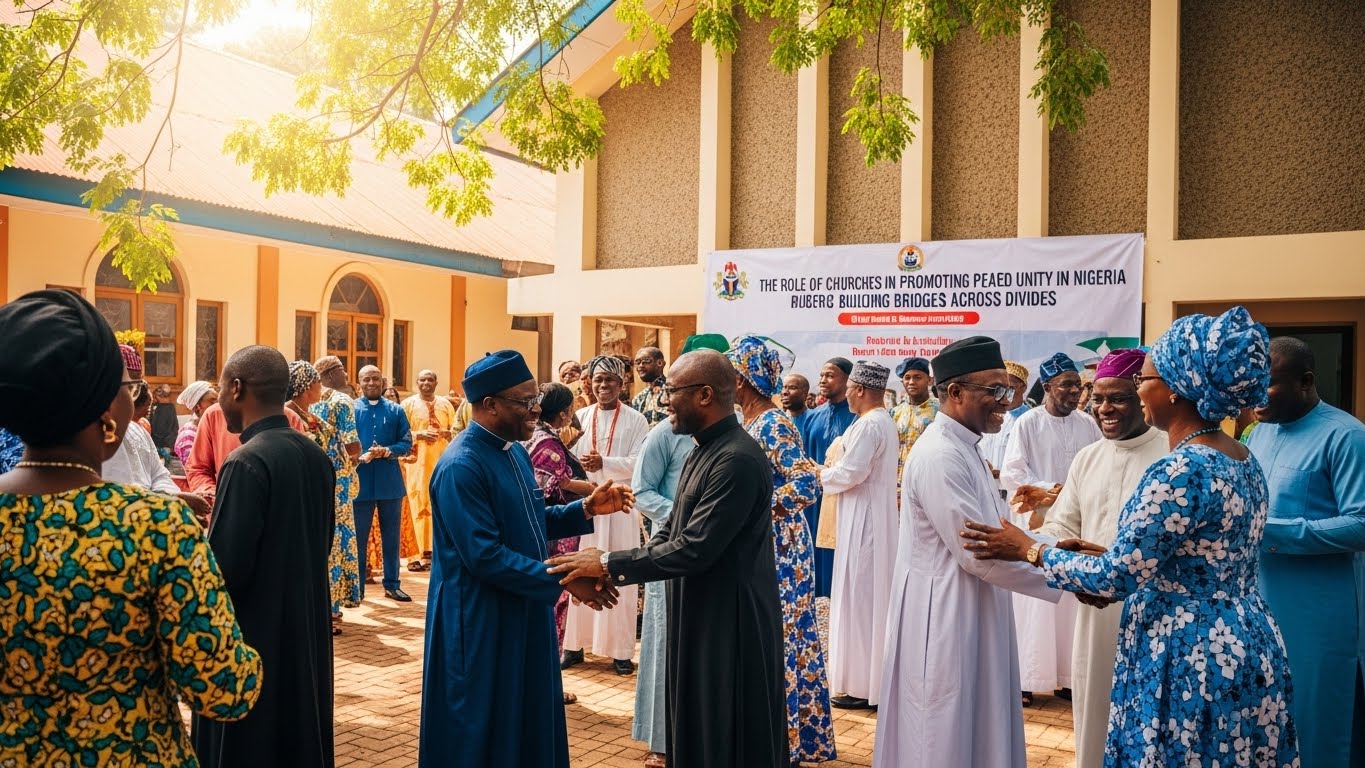
In a nation of over 200 million people comprising more than 250 ethnic groups, speaking over 500 languages, and divided between major religious traditions, Nigeria faces constant challenges to national unity and peaceful coexistence. Ethnic tensions simmer beneath the surface of daily interactions, religious differences occasionally explode into violence, regional rivalries fuel political conflicts, and economic inequalities create resentment across social classes.
Yet amidst these centrifugal forces threatening to tear the nation apart, Nigerian churches have emerged as critical institutions working to hold the fabric of society together. From pulpits in Lagos where pastors preach messages of reconciliation, to community halls in Jos where church leaders facilitate interfaith dialogue, to relief centers in Maiduguri where Christians serve victims of violence regardless of their religion, Nigerian churches are actively engaged in peacebuilding and unity promotion across the nation.
This role isn’t merely incidental to the church’s mission—it flows directly from the gospel message itself. Jesus Christ, described as the “Prince of Peace,” commanded His followers to be peacemakers and prayed for unity among believers. The apostles taught that Christ broke down dividing walls of hostility, creating one new humanity from previously separated groups. Throughout history, the church at its best has served as a reconciling force, bringing together people whom society divided.
Nigerian churches today carry this ancient mandate into contemporary contexts marked by unique challenges. This comprehensive article explores how churches across Nigeria—from megachurches in Abuja to small assemblies in rural Taraba State, from Pentecostal movements to historic mission churches—are working to promote peace and foster unity in a fractured nation. We’ll examine specific initiatives, celebrate successes, acknowledge failures, identify challenges, and explore how churches can more effectively fulfill their peacemaking calling.
Whether you’re a pastor in Kano seeking to promote religious harmony, a church leader in Plateau State working to heal ethnic divisions, a believer in Lagos wondering how your faith community can contribute to national unity, or simply someone concerned about Nigeria’s future, this exploration will inform, inspire, and potentially mobilize you toward peacebuilding action.
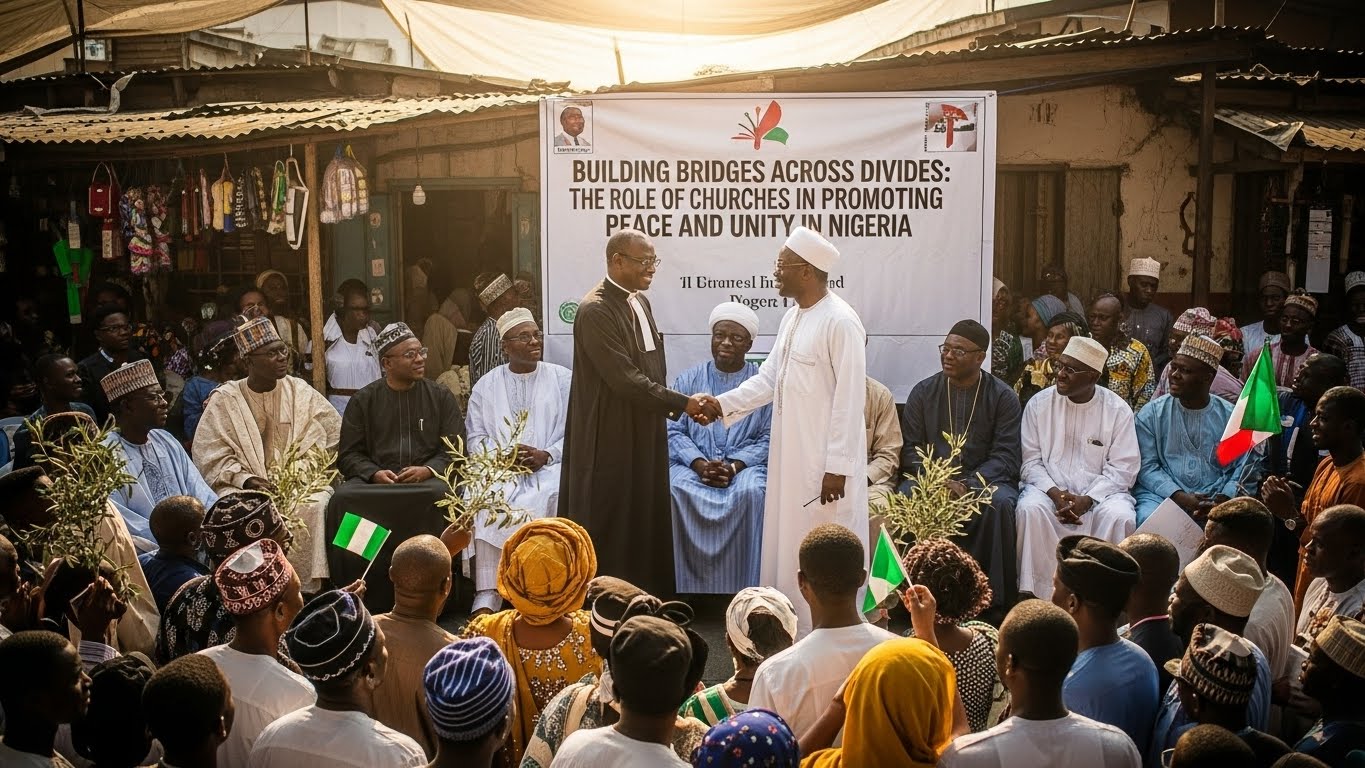 Nigeria’s Unity Challenges: Understanding the Context
Ethnic and Tribal Divisions
Nigeria’s ethnic diversity, while a potential source of cultural richness, has historically been a source of tension and conflict.
Historical Roots:
Colonial policies that emphasized ethnic differences, created artificial boundaries dividing ethnic groups, and implemented divide-and-rule strategies established patterns of ethnic competition that persist today. Post-independence politics that rewarded ethnic loyalty and distributed resources along ethnic lines deepened these divisions.
Contemporary Nigeria sees ethnic tensions manifest in various ways—political appointments perceived as favoring certain ethnic groups, land disputes between communities, stereotyping and prejudice across ethnic lines, and occasional violence when tensions escalate.
Regional Dynamics:
Nigeria’s unofficial division into North and South, with further subdivisions into geopolitical zones, creates regional identities that sometimes conflict. Northerners versus Southerners, Igbo versus Yoruba versus Hausa/Fulani—these fault lines periodically strain national unity.
Churches must navigate these ethnic complexities, as congregations themselves often reflect Nigeria’s ethnic diversity while individual churches may predominantly serve particular ethnic communities.
Religious Tensions
Religious divisions, particularly between Christians and Muslims, represent perhaps Nigeria’s most serious unity challenge.
Violence and Trauma:
Religious violence in places like Jos, Kaduna, and northeastern Nigeria has claimed thousands of lives over decades, creating deep trauma, mistrust, and cycles of revenge. Communities that once coexisted peacefully now live in segregation and suspicion.
Christian minorities in predominantly Muslim northern states face discrimination, restrictions on church building, and occasional violence. Muslim minorities in predominantly Christian areas similarly experience marginalization. These experiences fuel mutual resentment and fear.
Political Manipulation:
Politicians sometimes exploit religious divisions for electoral advantage, framing political contests as religious conflicts. This manipulation deepens religious polarization, making genuine interfaith cooperation more difficult.
Extremism Threats:
The Boko Haram insurgency in northeastern Nigeria, with its explicitly anti-Christian ideology, has intensified Christian-Muslim tensions even in areas far from the conflict zone. Attacks on churches, kidnappings of Christians, and destruction of Christian communities create fear and anger.
Economic Inequality
Economic disparities across regions, ethnicities, and social classes create resentments that threaten unity.
Regional Imbalances:
Perceived economic marginalization of certain regions—the Niger Delta’s environmental degradation despite oil wealth, southeastern Nigeria’s infrastructure deficits, northwestern poverty—fuels separatist sentiments and regional grievances.
Class Divisions:
The massive gap between Nigeria’s wealthy elite and impoverished masses creates social tensions. When this wealth gap aligns with ethnic or religious identities, it compounds other divisions.
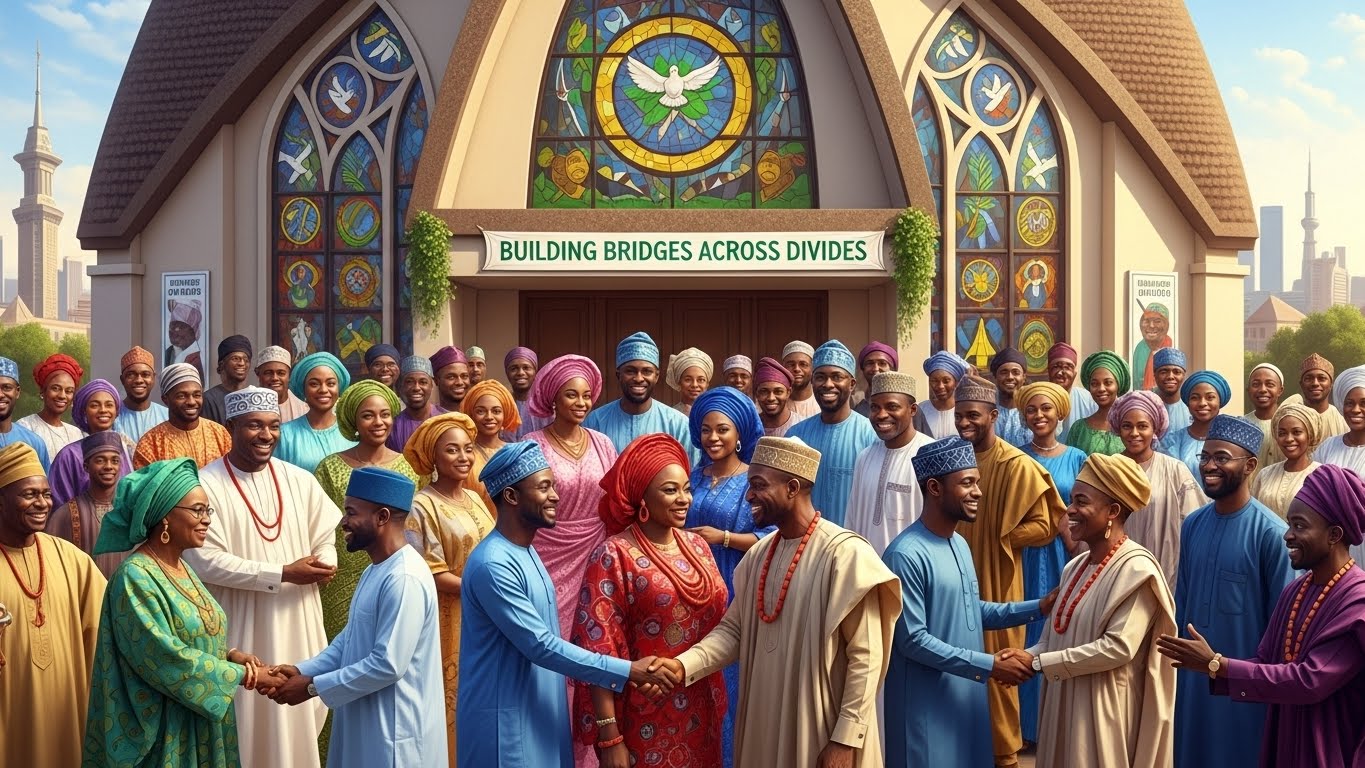 Political Conflicts
Nigeria’s political system often exacerbates rather than bridges divides.
Zero-Sum Politics:
Political competition framed as winner-take-all contests where losing means complete exclusion encourages ethnic mobilization and religious polarization. Politics becomes warfare by other means rather than cooperative governance.
Electoral Violence:
Contested elections frequently trigger violence along ethnic or religious lines, as happened in 2011 post-election violence in northern Nigeria. The politicization of identity makes elections existential contests rather than routine democratic exercises.
Biblical Foundations for Church Peacemaking
Christ the Reconciler
Nigerian churches ground their peacebuilding efforts in biblical theology emphasizing God’s reconciling work.
Breaking Down Dividing Walls:
Ephesians 2:14-16 describes Christ destroying the barrier dividing Jews and Gentiles, creating one new humanity. Churches apply this principle to Nigerian divisions—if Christ can reconcile groups with centuries of mutual hostility, He can bridge Nigeria’s ethnic and religious divides.
Ministry of Reconciliation:
2 Corinthians 5:18-20 describes believers receiving the ministry of reconciliation, becoming ambassadors for Christ. Nigerian church leaders cite this passage when explaining their peacemaking work—it’s not optional advocacy but core Christian calling.
Jesus’s Peacemaking Teachings
Christ’s explicit teachings on peacemaking provide clear mandates for church engagement.
Blessed Are the Peacemakers:
Matthew 5:9 promises that peacemakers will be called children of God. Nigerian churches emphasize that pursuing peace isn’t weakness but reflects divine character.
Love Your Enemies:
Christ’s radical command to love enemies and pray for persecutors (Matthew 5:43-48) challenges churches to extend grace even toward those who have hurt Christian communities. This teaching proves especially difficult in areas experiencing religious violence.
The Good Samaritan:
This parable (Luke 10:25-37) commands loving neighbors across ethnic and religious boundaries. Nigerian churches apply this to contemporary contexts—the true neighbor is whoever shows mercy, regardless of background.
Old Testament Justice and Peace
Hebrew Scripture’s emphasis on justice as prerequisite for peace shapes church approaches.
Shalom Vision:
The Hebrew concept of shalom—comprehensive wellbeing encompassing justice, righteousness, and harmony—provides holistic peace vision beyond merely ending violence. Churches work for shalom by addressing injustice, poverty, and oppression alongside promoting reconciliation.
Prophetic Witness:
Old Testament prophets confronted injustice and called for righteous living as paths to peace. Nigerian churches maintaining prophetic voices calling out corruption, ethnic favoritism, and religious persecution follow this tradition.
How Nigerian Churches Promote Peace and Unity
Preaching and Teaching Reconciliation
The most fundamental church contribution involves consistently teaching biblical principles of peace, unity, and reconciliation.
Sunday Sermons:
Pastors across Nigeria regularly preach against tribalism, ethnic hatred, religious intolerance, and violence. Messages emphasizing our common humanity in Christ, God’s love for all people groups, and believers’ responsibility to pursue peace shape congregational attitudes.
Churches in ethnically diverse cities like Lagos, Abuja, and Port Harcourt particularly emphasize unity messages, addressing the ethnic diversity within their own congregations. Pentecostal churches like The Redeemed Christian Church of God (RCCG), Winners Chapel, and Daystar Christian Centre regularly include reconciliation themes in teaching.
Practical Application:
Effective pastors move beyond general unity rhetoric to address specific Nigerian contexts—condemning ethnic stereotyping when it occurs, challenging congregation members who express tribal prejudices, and teaching practical peacemaking skills applicable to daily interactions.
Modeling Diverse Leadership
Churches demonstrating ethnic and regional diversity in leadership provide powerful unity testimonies.
Multiethnic Leadership Teams:
Churches intentionally building leadership teams reflecting Nigeria’s diversity send clear messages that the gospel transcends tribal identity. When congregations see Igbo, Yoruba, Hausa, and minority ethnic leaders serving together, it models achievable unity.
Churches like Daystar Christian Centre in Lagos, The Elevation Church, and House on the Rock consciously pursue diverse leadership, believing it strengthens ministry while promoting reconciliation.
Breaking Ethnic Church Patterns:
While many Nigerian churches remain ethnically homogeneous due to language and location factors, some deliberately work against this pattern. They use English rather than indigenous languages in services, locate in diverse neighborhoods, and actively recruit across ethnic lines.
Interfaith Dialogue and Cooperation
Progressive Nigerian churches engage in interfaith dialogue with Muslim communities, building relationships that prevent conflict.
Christian-Muslim Dialogue Forums:
Organizations like the Nigeria Inter-Religious Council (NIREC), with church participation, facilitate dialogue between Christian and Muslim leaders. These conversations build personal relationships, increase mutual understanding, and create communication channels useful during tensions.
In cities like Kaduna and Jos with histories of religious violence, church leaders participating in dialogue initiatives help prevent rumor-fueled conflicts by quickly communicating accurate information through established relationships.
Joint Community Service:
Some churches partner with mosques on community development projects—building schools, providing medical services, or addressing poverty. These collaborations demonstrate that religious communities can cooperate for common good beyond doctrinal differences.
Cautious Approaches:
Church interfaith engagement faces critics who view it as compromising Christian distinctiveness or naively ignoring real theological differences and threats. Churches must balance principled engagement with maintaining Christian identity and acknowledging legitimate concerns.
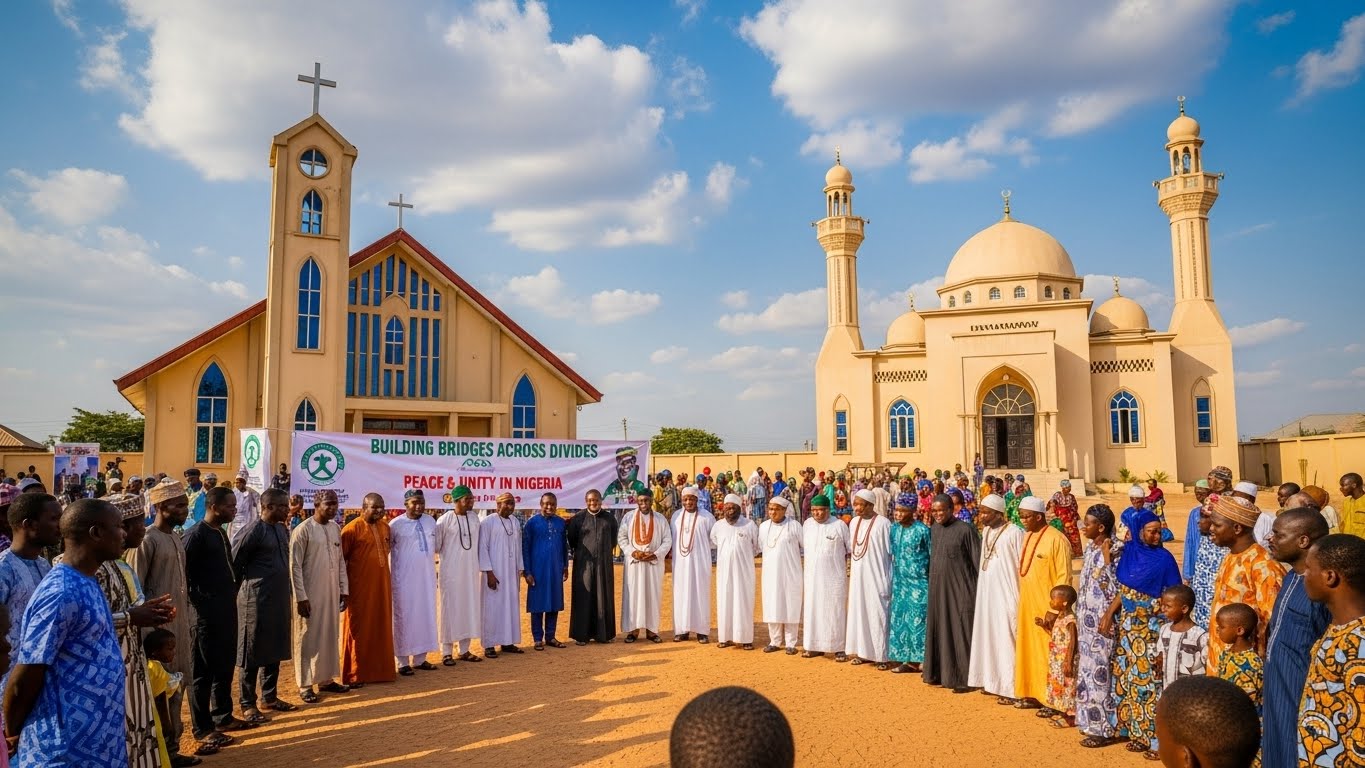 Peace Education and Conflict Resolution Training
Forward-thinking churches equip members with practical peacebuilding skills.
Conflict Resolution Workshops:
Churches conduct training in nonviolent communication, mediation skills, and conflict transformation. These skills apply in family conflicts, workplace disputes, and community tensions.
Churches in Plateau State, where ethnic and religious conflicts have been particularly severe, have partnered with organizations like the Centre for Humanitarian Dialogue to train church leaders in conflict resolution.
Youth Peace Programs:
Recognizing that youth are often manipulated into violence, churches develop programs teaching young people peaceful conflict resolution, critical thinking about inflammatory rhetoric, and positive ethnic relations.
Youth programs in churches across Lagos, Abuja, and other cities include components addressing prejudice, promoting tolerance, and building peacemaking skills.
Relief and Reconciliation After Violence
When violence occurs, churches play critical roles in relief provision and reconciliation facilitation.
Humanitarian Response:
After communal conflicts or terrorist attacks, churches mobilize to provide relief regardless of victims’ religious or ethnic identities. Christian organizations served victims of Boko Haram violence including Muslims, demonstrating Christ-like compassion transcending religious boundaries.
The Christian Association of Nigeria (CAN) and various denominations have coordinated relief efforts following violence in Jos, southern Kaduna, and northeastern Nigeria, providing medical care, temporary shelter, food, and trauma counseling.
Reconciliation Facilitation:
Beyond immediate relief, churches engage in longer-term reconciliation work—bringing together survivors from different communities, facilitating dialogue about root causes of violence, and working toward forgiveness and restored relationships.
This difficult work requires patience, cultural sensitivity, and recognition that genuine reconciliation takes years, not days. Churches in Jos have been particularly active in post-conflict reconciliation efforts.
Advocacy and Prophetic Voice
Churches exercise moral authority by speaking against injustice, violence, and policies that undermine unity.
Speaking Truth to Power:
Church leaders like Matthew Hassan Kukah (Catholic Bishop of Sokoto Diocese) consistently speak against government failures, corruption, and policies that marginalize certain groups. This prophetic witness holds leaders accountable while advocating for marginalized communities.
The Christian Association of Nigeria periodically issues statements condemning violence against Christians, calling for justice, and advocating for policies promoting religious freedom and national unity.
Mediation in Political Conflicts:
Church leaders sometimes mediate political disputes, leveraging moral authority to bring conflicting parties to negotiating tables. During electoral crises, church leaders have occasionally played mediating roles between political factions.
Building Social Capital Through Congregational Life
Simply by being diverse communities where people from different backgrounds worship together, churches build social capital reducing conflict.
Relationships Across Differences:
In ethnically diverse churches, members develop friendships with people different from themselves. These personal relationships humanize “the other,” making abstract ethnic groups concrete individuals whom you know and care about.
When ethnic tensions rise nationally, these personal relationships provide resistance to dehumanizing rhetoric and violence. It’s harder to hate a group when your close friend belongs to it.
Shared Identity in Christ:
Churches teach that Christian identity supersedes ethnic identity—”we are first and foremost Christians, then Nigerians, then Igbo/Yoruba/Hausa.” This theological hierarchy of identities potentially reduces ethnic conflict by creating shared primary identity across ethnic lines.
Community Development Projects
Churches promoting community development address root causes of conflict like poverty and inequality.
Economic Empowerment:
Churches providing vocational training, microfinance, or job creation address economic grievances that often underlie ethnic or religious conflicts. When people have economic opportunities and hope for the future, they’re less susceptible to conflict mobilization.
Educational Initiatives:
Church schools and literacy programs that serve diverse populations promote interaction across differences while addressing educational inequality that fuels resentment.
Notable Church Peace Initiatives
The Plateau Peace Building Agency (PPBA)
In Jos, Plateau State—epicenter of religious and ethnic violence—churches partnered with mosques and traditional rulers to establish the Plateau Peace Building Agency.
Collaborative Approach:
This initiative brings together Christian and Muslim religious leaders, traditional rulers, and civil society organizations in systematic conflict prevention and resolution efforts. Churches provided critical leadership and support in establishing this framework.
Impact:
The PPBA has helped reduce violence frequency in Plateau State through early warning systems, rapid response to tensions, and ongoing reconciliation programs. While conflicts haven’t entirely ceased, the infrastructure for managing them has significantly improved.
Interfaith Mediation Centre (IMC)
Based in Kaduna with church involvement, the IMC facilitates dialogue between Christian and Muslim communities.
Dialogue Programs:
The IMC conducts regular interfaith dialogue sessions where religious leaders discuss theological differences, address misconceptions, and build relationships. These conversations create understanding that prevents conflict.
Youth Engagement:
Recognizing that youth perpetrate much religious violence, the IMC runs youth programs bringing together young Christians and Muslims for dialogue, joint community service, and relationship building.
The Redeemed Christian Church of God Peace Initiatives
RCCG, Nigeria’s largest Pentecostal denomination, has implemented various peace-promoting programs.
Multiethnic Congregations:
RCCG’s emphasis on planting parishes in all communities has created thousands of multiethnic congregations across Nigeria. The denomination’s policy of assigning pastors to parishes regardless of ethnic background promotes diversity.
Peace Advocacy:
RCCG leadership has consistently preached messages of national unity, condemned ethnic violence, and called for peaceful resolution of conflicts. General Overseer Pastor E.A. Adeboye regularly addresses national unity in sermons reaching millions.
Relief Programs:
RCCG’s relief arms have provided humanitarian assistance to violence victims regardless of religion, demonstrating practical compassion that builds bridges.
Catholic Church Peacebuilding Efforts
The Catholic Church’s hierarchical structure and national presence position it uniquely for peacebuilding work.
Justice, Development and Peace Commissions:
Catholic dioceses across Nigeria operate Justice, Development and Peace (JDP) commissions focused on conflict resolution, human rights advocacy, and peacebuilding. These commissions have mediated community conflicts across the country.
Bishop Kukah’s Advocacy:
Bishop Matthew Hassan Kukah has become Nigeria’s most prominent prophetic voice, consistently speaking against injustice, ethnic favoritism, religious intolerance, and government failures. His moral authority transcends Catholic circles, influencing national discourse.
Interfaith Engagement:
The Catholic Church maintains robust interfaith dialogue programs, particularly through the Pontifical Council for Interreligious Dialogue. Catholic bishops regularly meet with Muslim leaders to address tensions and promote cooperation.
Pentecostal Fellowship of Nigeria (PFN) Initiatives
The PFN, umbrella organization for Pentecostal churches, coordinates peace efforts across member churches.
Unity Conferences:
PFN organizes conferences bringing together Pentecostal leaders from across Nigeria’s regions and ethnic groups, building relationships and promoting unity within the church that models broader national unity.
Violence Response:
When religious violence occurs, PFN leadership issues statements, visits affected areas, and coordinates relief efforts, demonstrating Christian solidarity with persecuted communities while calling for peace.
Local Church Community Peacebuilding
Beyond national initiatives, countless local churches engage in grassroots peacebuilding.
Community Mediation:
Pastors across Nigeria regularly mediate disputes between community members, families, or groups. This informal conflict resolution prevents escalation while building pastoral credibility.
Reconciliation Services:
Churches in areas with recent conflicts organize reconciliation services bringing together previously hostile groups for prayer, confession, forgiveness, and relationship restoration.
Challenges Facing Church Peacebuilding Efforts
Church Complicity in Division
Churches sometimes contribute to division rather than unity, undermining their peacebuilding credibility.
Ethnic Churches:
Many Nigerian churches remain ethnically homogeneous, functioning as ethnic enclaves rather than unity models. When churches mirror rather than challenge society’s divisions, they lose prophetic witness.
Some churches explicitly identify with particular ethnic groups, using indigenous languages exclusively and celebrating ethnic culture in ways that exclude others. While cultural celebration isn’t inherently wrong, it can reinforce rather than bridge divides.
Partisan Politics:
Church leaders endorsing political candidates or parties along ethnic or regional lines compromise their ability to promote national unity. When pastors become seen as partisan actors, their moral authority diminishes.
Prosperity Gospel Materialism:
Churches emphasizing material prosperity over justice, compassion, and reconciliation may inadvertently reinforce social divisions by ignoring structural injustices and focusing only on individual advancement.
Theological Obstacles
Certain theological positions hinder effective church peacebuilding.
Exclusivist Theology:
Churches with rigid exclusivist theology viewing all non-Christians as enemies find interfaith dialogue difficult. While maintaining Christian distinctiveness, churches need theological frameworks allowing respectful engagement with other faiths.
Spiritual Warfare Framing:
Some Nigerian churches frame all conflicts in spiritual warfare terms, viewing Muslims or traditional religionists as demonic enemies rather than human beings created in God’s image. This framework prevents genuine dialogue and peacebuilding.
Apocalyptic Fatalism:
Churches emphasizing end-times violence as inevitable may discourage peacebuilding efforts, viewing conflict as prophetic fulfillment rather than human tragedy requiring response.
Security Concerns
In areas experiencing violence, church peacebuilding efforts face security challenges.
Physical Danger:
Church leaders engaging in reconciliation work sometimes become targets. Facilitating dialogue between hostile groups or speaking against violence can provoke retaliation from those benefiting from conflict.
Community Pressure:
Churches promoting reconciliation face pressure from their own communities not to “fraternize with the enemy.” After religious violence, Christian communities sometimes view interfaith dialogue as betrayal.
Limited Resources
Peacebuilding requires resources many churches lack.
Financial Constraints:
Effective peacebuilding programs—training, dialogue facilitation, relief provision—require funding many churches cannot access. This limits the scope and sustainability of peace initiatives.
Expertise Gaps:
Churches may lack trained mediators, conflict resolution specialists, or trauma counselors necessary for effective peacebuilding. While pastoral care provides some skills, specialized expertise enhances effectiveness.
Political Manipulation
Government manipulation of religious tensions complicates church peacebuilding.
Instrumentalized Religion:
When politicians exploit religious divisions for electoral advantage or use religious institutions for political purposes, church efforts to promote religious harmony face countervailing political pressures.
Selective Response:
Government security responses that protect some religious communities while failing to protect others fuel resentment that churches struggle to address while maintaining prophetic witness.
Best Practices for Church Peacebuilding
Theological Grounding
Effective church peacebuilding requires solid theological foundation.
Peace Theology Development:
Churches should develop robust biblical peace theology articulating why peacemaking is central to Christian faith, how it relates to evangelism, and how it applies in Nigerian contexts. This theology must be preached, taught, and integrated into church life.
Balancing Truth and Grace:
Churches must balance maintaining Christian convictions with extending grace toward others. Effective peacebuilding requires both theological clarity and humble engagement.
Practical Skill Building
Churches need practical peacebuilding competencies.
Conflict Resolution Training:
Church leaders should receive training in mediation, nonviolent communication, and conflict transformation. These skills enhance effectiveness in addressing community conflicts.
Trauma Healing Capacity:
In violence-affected areas, churches should develop trauma counseling capacity, helping communities heal from violence-induced trauma that perpetuates conflict cycles.
Authentic Relationships
Genuine peacebuilding requires authentic relationships across differences.
Long-Term Commitment:
Effective interfaith dialogue and reconciliation require sustained relationship-building over years, not occasional symbolic meetings. Churches must commit to ongoing engagement.
Mutual Respect:
Authentic dialogue requires respecting others’ beliefs while maintaining one’s own. Churches approaching interfaith engagement with superiority or disguised evangelism undermine trust and effectiveness.
Holistic Approaches
Comprehensive peacebuilding addresses multiple dimensions.
Justice and Peace Together:
Churches must address injustices underlying conflicts while promoting reconciliation. Peace without justice proves unsustainable, while justice pursued without forgiveness perpetuates vengeance cycles.
Spiritual and Practical:
Effective approaches combine spiritual resources (prayer, forgiveness, reconciliation) with practical interventions (economic development, education, conflict resolution structures).
Strategic Partnerships
Churches amplify impact through partnerships.
Ecumenical Cooperation:
Churches cooperating across denominational lines present more unified witness while sharing resources and expertise. Ecumenical peacebuilding efforts prove more effective than isolated denominational initiatives.
Civil Society Collaboration:
Partnering with NGOs, community organizations, and peace-focused groups multiplies church impact while accessing expertise churches may lack.
The Path Forward: Strengthening Church Peacebuilding
Institutional Capacity Building
Nigerian churches need stronger institutional frameworks for peacebuilding.
Peace and Reconciliation Departments:
Larger denominations and church associations should establish dedicated departments focused on peacebuilding, providing resources, training, and coordination for member churches’ peace initiatives.
Training Programs:
Seminaries and Bible schools should integrate peacebuilding, conflict resolution, and reconciliation into pastoral training curricula, ensuring emerging church leaders have these competencies.
Younger Generation Engagement
Equipping younger Nigerians as peacebuilders proves critical.
Youth Peace Education:
Church youth programs should systematically teach peace values, conflict resolution skills, and critical thinking about inflammatory ethnic or religious rhetoric.
Youth Exchange Programs:
Programs bringing together Christian youth from different ethnic groups or facilitating Christian-Muslim youth dialogue build relationships that reduce future conflict potential.
Digital Peacebuilding
Churches should leverage digital platforms for peace promotion.
Counter-Narratives:
Churches should use social media to counter hate speech, ethnic stereotypes, and inflammatory religious rhetoric circulating online. Promoting messages of unity, tolerance, and mutual respect provides alternative narratives.
Online Dialogue Spaces:
Creating moderated online forums for interfaith or interethnic dialogue extends peacebuilding beyond physical limitations, engaging digitally-connected Nigerians.
Advocacy for Systemic Change
Churches should intensify advocacy addressing structural conflict causes.
Justice Advocacy:
Churches should more boldly advocate for ending corruption, ethnic favoritism in governance, economic marginalization of regions, and security force bias. Addressing these systemic issues reduces conflict drivers.
Policy Engagement:
Churches should engage policymaking processes, advocating for policies promoting religious freedom, ethnic equality, and equitable resource distribution.
Frequently Asked Questions (FAQs)
1. Can churches really promote peace when Nigeria’s conflicts often involve religion?
Yes, though it’s challenging. While some conflicts in Nigeria involve religious dimensions, churches can promote peace by: demonstrating that Christianity doesn’t require hostility toward Muslims through interfaith dialogue and cooperation; addressing root causes of conflicts (poverty, injustice, governance failures) that often underlie seemingly religious violence; providing moral authority to condemn violence and promote tolerance; and building relationships across religious divides that humanize “the other.” However, church effectiveness requires acknowledging Christian community legitimate grievances while avoiding rhetoric that demonizes Muslims collectively. Churches must balance prophetic witness about religious persecution with commitment to peaceful coexistence and reconciliation.
2. How can churches promote unity when they’re themselves divided along denominational and ethnic lines?
Churches must first address their own divisions before effectively promoting national unity. This requires: ecumenical cooperation prioritizing Christian unity across denominational boundaries; intentionally building multi-ethnic congregations and leadership teams; confronting tribalism within churches when members express ethnic prejudices; and recognizing that church credibility in promoting national unity depends partly on demonstrating unity within Christianity. While complete Christian unity remains aspirational, demonstrable progress toward unity enhances church moral authority in advocating for national unity. Churches should view their own reconciliation work as both theological imperative and practical prerequisite for effective societal peacebuilding.
3. Doesn’t interfaith dialogue compromise Christian distinctiveness and truth claims?
Interfaith dialogue doesn’t require abandoning Christian convictions. Effective dialogue balances maintaining Christian identity with respectful engagement. Churches can: clearly articulate Christian beliefs while genuinely listening to others’ perspectives; cooperate on shared concerns (justice, peace, poverty) without compromising core doctrines; distinguish between dialogue (understanding others) and syncretism (blending incompatible beliefs); and recognize that showing Christ-like love toward Muslims or traditional religionists doesn’t mean accepting their theological positions. Jesus engaged respectfully with Samaritans and Romans while maintaining His identity and mission. Churches can follow this model—firm in faith, gracious in engagement.
4. What role should churches play when Christians face persecution or violence?
Churches must balance prophetic witness about injustice with commitment to peace. Appropriate responses include: documenting and publicizing violence against Christians to pressure authorities toward protection; providing relief and support to affected Christian communities; advocating for government protection and justice for perpetrators; calling for Christian community restraint against revenge violence; engaging authorities and Muslim leaders to address root causes; and maintaining distinction between legitimate advocacy for Christian community rights and inflammatory rhetoric perpetuating conflict cycles.
Churches should speak truth about persecution while resisting temptation toward victimization narratives that prevent constructive engagement or justify Christian violence.
5. How can churches in peaceful areas contribute to peace in conflict-affected regions?
Churches not directly experiencing conflict can: provide financial support for peacebuilding programs in affected areas; send volunteer mediators, counselors, or relief workers to conflict zones; host youth from conflict areas in exchange programs building bridges; advocate with government for better security and justice in affected regions; educate their congregations about conflict realities, combating stereotypes; partner with churches in conflict zones for long-term solidarity; and avoid inflammatory rhetoric about conflicts they don’t directly experience. Additionally, churches in peaceful areas should examine their own ethnic prejudices and religious attitudes, recognizing that attitudes formed everywhere contribute to national climate either supporting peace or enabling conflict.
Conclusion: The Church’s Indispensable Role
As Nigeria navigates profound challenges threatening national unity—ethnic tensions, religious conflicts, regional rivalries, and political polarization—churches occupy unique positions as potential agents of peace and reconciliation. With moral authority, community presence, theological resources emphasizing reconciliation, and millions of members across every Nigerian community, churches possess unparalleled capacity to promote peace and foster unity.
The Urgency of the Moment
Nigeria’s conflicts exact terrible costs—thousands of lives lost, communities displaced, economic development hindered, and national potential squandered. The human suffering behind these statistics—orphaned children, widowed spouses, traumatized survivors—demands urgent response. Churches cannot remain silent or passive while their neighbors suffer and their nation fractures.
The alternative to successful peacebuilding is frightening—continued cycles of violence, potential national disintegration, or descent into failed state status. While these worst-case scenarios aren’t inevitable, avoiding them requires intentional effort from all sectors, with churches playing central roles.
The Opportunity Before Us
Despite challenges, Nigerian churches possess remarkable opportunities to promote peace and unity. The gospel they proclaim inherently promotes reconciliation, their congregational life provides spaces for practicing unity across differences, and their moral authority grants them hearing when they speak about peace and justice.
Moreover, Nigerian Christianity’s vibrancy—rapid growth, engaged membership, and social influence—means churches mobilized toward peacebuilding could dramatically impact national trajectory. Imagine if Nigeria’s estimated 80-90 million Christians became active peacebuilders, consistently promoting unity in their families, workplaces, and communities. The cumulative effect would transform national culture.
Moving from Rhetoric to Action
However, realizing this potential requires moving beyond general unity rhetoric toward concrete peace building action. Churches must:
- Preach and teach peace theology consistently, shaping congregational attitudes toward ethnic and religious others
- Model unity through diverse leadership and inclusive congregational practices
- Engage interfaith dialogue respectfully and persistently, building relationships preventing conflict
- Train members in practical conflict resolution and peacebuilding skills
- Provide relief impartially when violence occurs, demonstrating Christ-like compassion
- Exercise prophetic voice condemning injustice, violence, and policies undermining unity
- Address root causes through community development programs tackling poverty and inequality
- Partner strategically with other churches, civil society, and stakeholders for multiplied impact
A Call to Every Believer
This isn’t merely work for church leaders or specialized organizations—every Nigerian Christian has a role in promoting peace and unity:
In Families: Raise children to value all ethnic groups, avoid stereotyping, and respect religious differences while maintaining Christian identity.
In Workplaces: Challenge ethnic favoritism, promote fair treatment across tribal lines, and model respectful relationships across differences.
In Communities: Build friendships with neighbors from different backgrounds, challenge inflammatory rhetoric, and participate in reconciliation initiatives.
In Churches: Support leadership promoting peace, volunteer in church peacebuilding programs, and hold churches accountable when they contribute to division.
In Voting: Support political candidates committed to national unity over ethnic champions, and resist politicians exploiting religious or ethnic divisions.
The Hope We Proclaim
Ultimately, church peace building efforts rest on theological conviction that God is reconciling all things in Christ. The same power that reconciled humanity to God can reconcile ethnic groups, religious communities, and divided regions. The resurrection that overcame death can overcome hatred. The Spirit who creates the church from diverse peoples can create unity within Nigeria.
This isn’t naive optimism ignoring conflict realities—it’s resurrection hope acknowledging that God specializes in bringing life from death and hope from despair. Nigerian Christians proclaim this hope not merely in abstract theology but through concrete peacebuilding demonstrating the gospel’s power to transform relationships and communities.
The Challenge Before Us:
Will Nigerian churches rise to this moment? Will we fulfill our calling as peacemakers and agents of reconciliation? Will we courageously bridge divides rather than comfortably remain within our ethnic or denominational enclaves? Will we love our neighbors—even our enemies—with Christ-like compassion?
The answers to these questions will significantly shape Nigeria’s future. May God grant Nigerian churches wisdom, courage, and grace to be the reconciling presence our nation desperately needs.
Join the Conversation: How is your church promoting peace and unity? What challenges do you face? What creative approaches have you seen work? Share your experiences and insights in the comments below!
For more articles about Nigerian church life, Christian social engagement, and faith in action, subscribe to our newsletter at Networknewss.com.ng. Stay informed and inspired to make a difference!