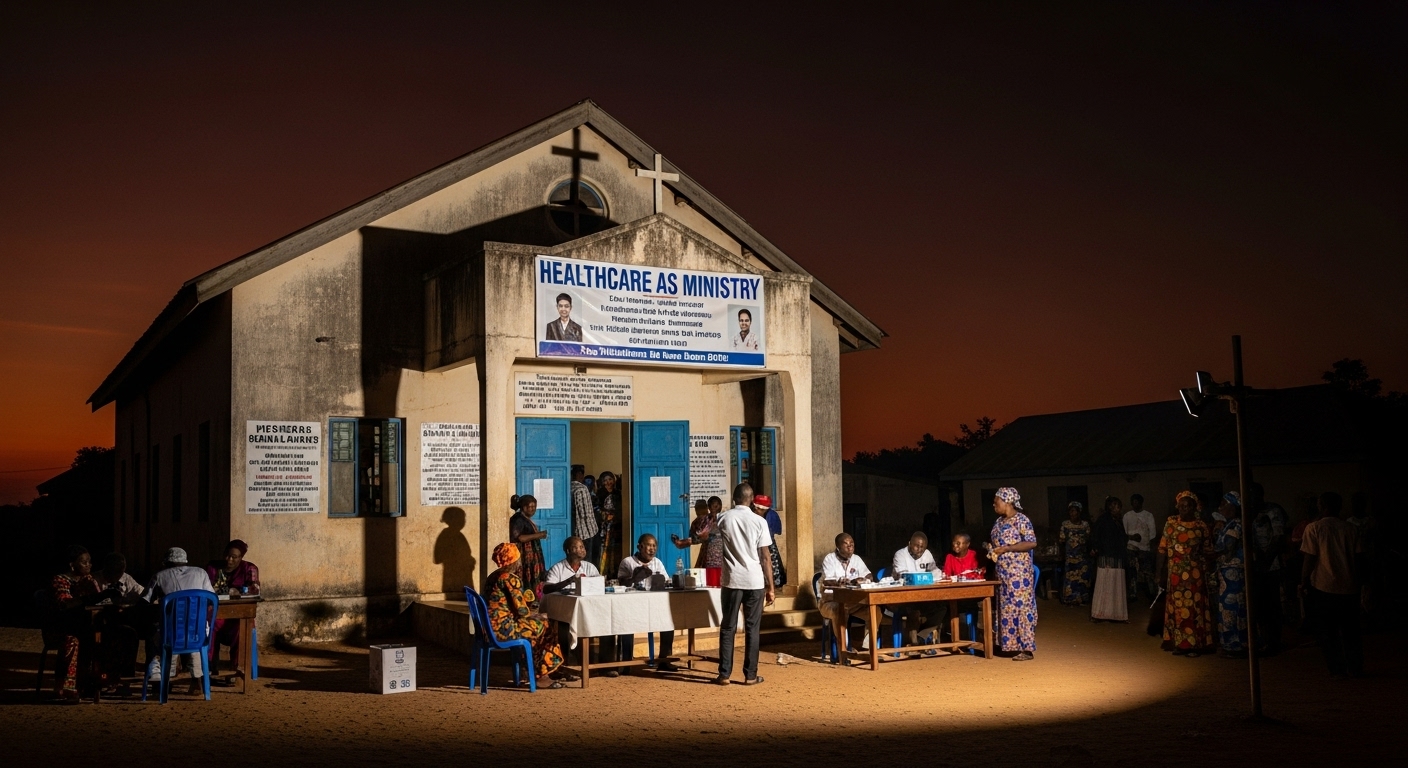
On a Saturday morning in a community in Mushin, Lagos, hundreds of people queue outside a church premises before dawn.
They’re not there for a church service—they’re waiting for a free medical outreach that will provide consultations, medications, and potentially life-saving diagnoses they couldn’t otherwise afford.
Inside, volunteer doctors, nurses, and pharmacists prepare to serve anyone who comes, regardless of religion, ethnicity, or social status.
This scene repeats itself across Nigeria—from the bustling streets of Ikeja and Surulere to remote villages in Benue and Akwa Ibom States.
Nigerian churches have emerged as critical healthcare providers, filling gaps in a national healthcare system struggling to meet the needs of over 200 million people.
Where government health infrastructure falls short and private medical care remains beyond most Nigerians’ financial reach, churches step in with compassion, resources, and commitment to serving the least of these.
The involvement of Nigerian churches in healthcare isn’t new—mission hospitals established by early Christian missionaries laid foundations for Nigeria’s modern healthcare system.
However, contemporary church medical outreaches represent an evolution of this legacy, adapted to current realities.
Today’s church medical programs range from one-day health screenings in church compounds to fully equipped mission hospitals providing comprehensive care, from mobile medical units traveling to underserved communities to specialized surgical missions correcting life-altering conditions.
This comprehensive article spotlights Nigerian churches making remarkable differences through medical outreach, examining their approaches, impact, challenges, and the theological motivations driving this compassionate service.
Whether you’re a church leader in Abuja considering starting medical outreach, a healthcare professional in Port Harcourt seeking to volunteer, a donor wanting to support effective programs, or simply someone inspired by Christians living out their faith through practical service, this exploration will inform, inspire, and perhaps mobilize you toward action.
Why Churches Engage in Medical Outreach
Biblical Foundation for Healthcare Ministry
Nigerian churches providing medical outreach ground their service in biblical precedents and theological convictions about the church’s role in society.
Jesus’s Healing Ministry:
Churches point to Jesus Christ’s earthly ministry, where healing the sick was as central as preaching the gospel. Jesus demonstrated that the Kingdom of God addresses both spiritual and physical needs. His compassion for suffering people, His willingness to touch the untouchable, and His instructions to His disciples to heal the sick provide clear mandates for church healthcare involvement.
The Good Samaritan Principle:
The parable of the Good Samaritan (Luke 10:25-37) teaches that true neighborly love involves practical care for those in need, regardless of religious or ethnic differences. Nigerian churches cite this parable when explaining why their medical outreaches serve everyone, not just church members or Christians.
James’s Practical Faith:
The book of James challenges believers to demonstrate faith through works, particularly caring for the vulnerable. Nigerian church leaders emphasize that medical outreach exemplifies the “pure religion” James describes—caring for the widows, orphans, and afflicted in their distress.
Addressing Nigeria’s Healthcare Crisis
Beyond biblical motivation, Nigerian churches respond to urgent practical needs created by healthcare system deficiencies.
Limited Access:
Despite progress, many Nigerians—particularly those in rural areas and urban slums—lack access to basic healthcare. Churches located within these communities can provide services that might otherwise be completely unavailable.
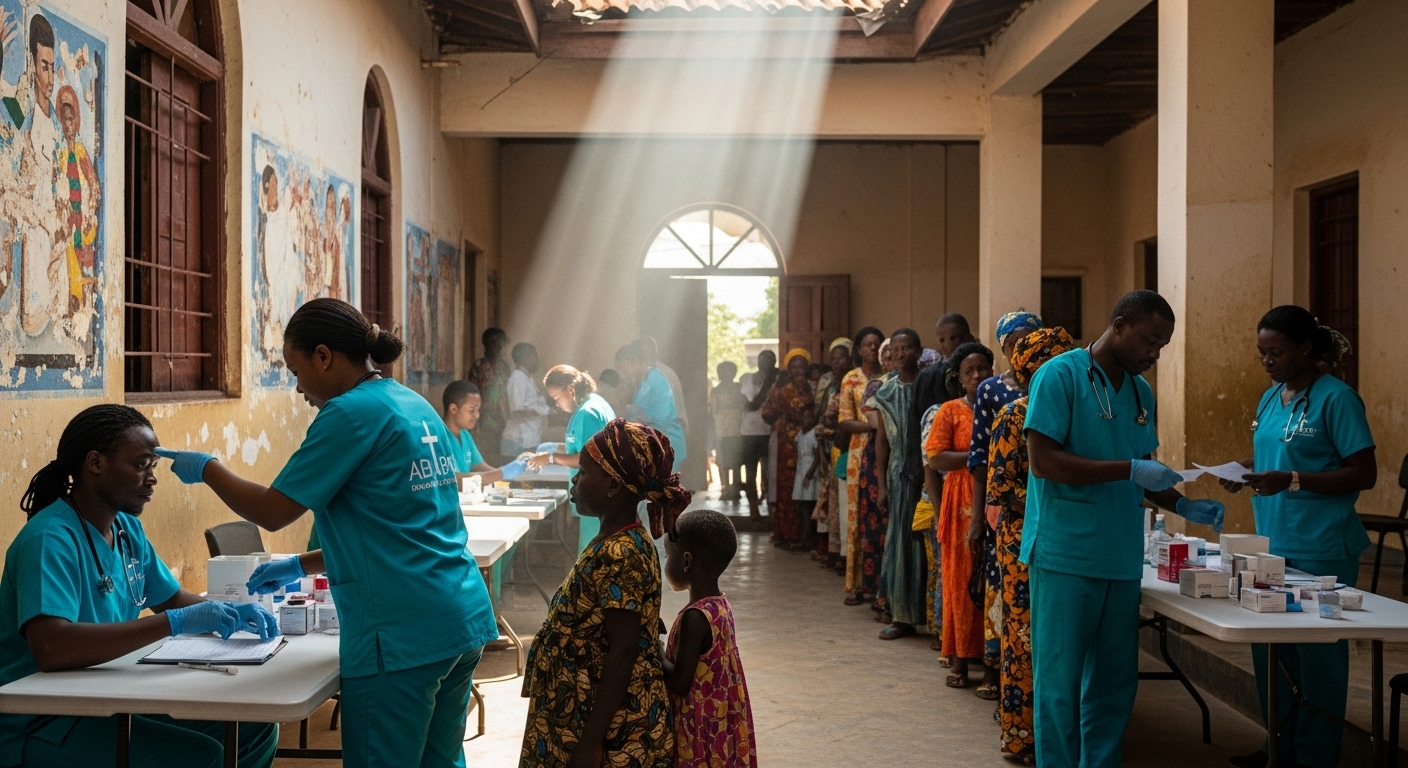
In communities across Ondo State, Ebonyi State, and rural parts of Ogun State, the nearest government health facility might be hours away by poor roads. Churches in these areas become primary healthcare access points for entire communities.
Unaffordable Care:
Even where healthcare facilities exist, costs prohibit many Nigerians from seeking treatment. People in cities like Ibadan, Benin City, and Kaduna delay medical care due to cost, allowing treatable conditions to become serious health crises.
Church medical outreaches eliminate financial barriers, ensuring that poverty doesn’t determine who receives care. This reflects the gospel’s radical inclusivity—healthcare as a human right rather than a commodity only the wealthy can afford.
Trust and Accessibility:
Churches enjoy community trust that government institutions sometimes lack. People who might avoid government health facilities due to negative experiences, corruption concerns, or cultural barriers often willingly attend church medical programs.
Additionally, churches already have community presence, physical infrastructure, and volunteer networks that can be mobilized for healthcare service without building entirely new systems.
Holistic Gospel Expression
Many Nigerian churches view medical outreach as integral to holistic gospel ministry that addresses the whole person.
Beyond Souls:
Progressive Nigerian churches recognize that effective evangelism requires demonstrating Christ’s love through practical service. Medical outreach creates credibility for the gospel message—people listen to churches that genuinely care for their wellbeing.
Churches in Lagos, Abuja, and Port Harcourt describe medical outreach as pre-evangelism, creating openness to spiritual messages among people who might otherwise resist. When churches meet physical needs without ulterior motives, they reflect Christ’s character in ways sermons alone cannot.
Community Transformation:
Churches committed to community transformation understand that spiritual renewal must accompany social improvement. Healthy communities are better positioned to thrive economically, educationally, and spiritually. Medical outreach becomes one component of comprehensive community development strategies.
Major Churches Leading Medical Outreach Efforts
The Redeemed Christian Church of God (RCCG)
RCCG, with parishes across Nigeria and globally, maintains robust medical outreach programs through various initiatives.
RCCG Medical Missions:
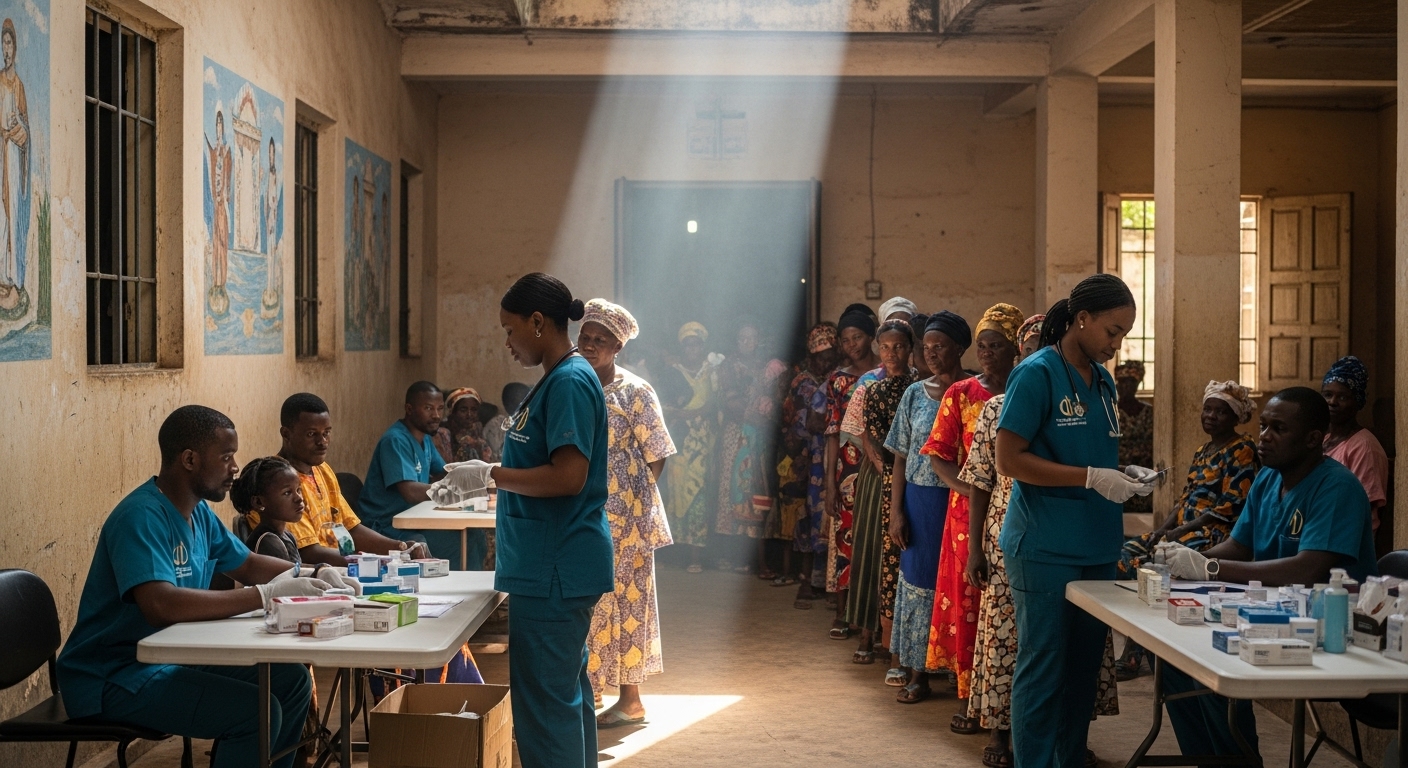
Multiple RCCG parishes organize regular medical missions in their communities. The Redeemed Christian Church of God City of David in Lagos, for example, conducts quarterly medical outreaches providing free consultations, laboratory tests, and medications to thousands.
RCCG parishes in Ibadan, Abuja, Enugu, and other cities similarly organize medical programs, leveraging their large congregations to mobilize volunteer healthcare professionals and funding. The denomination’s extensive reach means that RCCG medical initiatives collectively impact communities across Nigeria.
Redemption City Health Centre:
At the Redemption Camp along the Lagos-Ibadan Expressway, RCCG operates a health facility providing affordable care to camp residents and surrounding communities. During major events like the Holy Ghost Congress, this facility manages health emergencies for the hundreds of thousands attending.
Specialist Missions:
Some RCCG parishes organize specialized medical outreaches focusing on particular health challenges—eye clinics providing free screenings and glasses, dental missions addressing oral health, or women’s health programs offering cervical cancer screenings.
Winners Chapel (Living Faith Church)
Bishop David Oyedepo’s Living Faith Church Worldwide demonstrates significant commitment to healthcare through various programs.
Faith Clinic:
Winners Chapel operates Faith Clinic in Ota, Ogun State, providing affordable healthcare services. While not entirely free, the clinic offers significantly subsidized care, making quality healthcare accessible to low-income families in the area.
Community Health Outreaches:
Winners Chapel parishes across Nigeria organize regular medical outreaches in their localities. The church in Abuja, Lagos, and other major cities conduct health screenings, immunization programs, and health education campaigns.
International Medical Missions:
Winners Chapel also hosts international medical missions where foreign volunteer doctors and nurses come to Nigeria, providing specialized services not readily available locally. These missions have included surgical interventions, specialist consultations, and advanced diagnostic services.
Mountain of Fire and Miracles (MFM)
MFM’s approach to medical outreach combines healthcare provision with their spiritual warfare emphasis.
Prayer and Health Programs:
MFM organizes medical outreaches that combine free healthcare services with prayer sessions. Their programs typically include medical consultations followed by prayer for healing, reflecting their belief in both natural and supernatural healing.
Community Penetration:
With numerous parishes in Lagos and across Nigeria, MFM conducts localized medical outreaches that penetrate communities often overlooked by larger programs. Their grassroots presence enables them to reach vulnerable populations in dense urban areas.
Daystar Christian Centre
Daystar Christian Centre in Lagos exemplifies how contemporary Nigerian churches integrate social service into their ministry model.
Annual Medical Outreach:
Daystar conducts comprehensive annual medical outreaches in communities around their Oregun, Lekki, and other campuses. These programs provide consultations across multiple medical specialties, free medications, laboratory tests, and health education.
Mobile Medical Units:
Daystar has invested in mobile medical units that travel to underserved communities, bringing healthcare directly to people who cannot easily travel to fixed locations. This innovation significantly increases their outreach impact.
Partnerships with Healthcare Professionals:
Daystar leverages their large congregation of medical professionals—doctors, nurses, pharmacists, and laboratory scientists—who volunteer their time and expertise during outreaches. This partnership model maximizes impact without requiring unsustainable financial outlays.
Christ Embassy (Believers’ Loveworld)
Christ Embassy’s Inner City Mission program includes significant medical outreach components.
Inner City Medical Missions:
Christ Embassy organizes medical outreaches specifically targeting underserved urban communities. Their programs in Lagos slums, Warri neighborhoods, and other cities provide free medical care to vulnerable populations.
International Partnerships:
Christ Embassy leverages its international presence to bring volunteer medical teams from their churches abroad, supplementing Nigerian healthcare workers with additional expertise and resources.
Specialized Programs:
Christ Embassy has conducted eye care programs providing free eye exams and corrective glasses, dental missions addressing oral health needs, and women’s health programs focusing on reproductive health education and screenings.
The Elevation Church
This contemporary church in Lagos demonstrates how newer churches are embracing social responsibility.
Community Health Days:
The Elevation Church regularly organizes community health days in their Lekki area, providing free health screenings, consultations, and medications to community members regardless of church affiliation.
Mental Health Initiatives:
Recognizing Nigeria’s growing mental health crisis, The Elevation Church includes mental health counseling and awareness in their medical outreach programs, addressing an often-overlooked aspect of health.
Catholic Church Medical Missions
The Catholic Church’s long history of healthcare provision in Nigeria continues through various initiatives.
Mission Hospitals:
The Catholic Church operates numerous mission hospitals across Nigeria—Catholic Hospital Afikpo in Ebonyi State, St. Charles Borromeo Hospital in Onitsha, and many others providing affordable quality care.
Parish-Based Outreaches:
Individual Catholic parishes organize medical missions in their localities. These programs often collaborate with Catholic health institutions, accessing medications and expertise that enhance outreach effectiveness.
Religious Congregation Initiatives:
Various Catholic religious congregations—Sisters of Mercy, Holy Rosary Sisters, and others—maintain healthcare facilities and organize outreaches as core aspects of their charisms.
Other Notable Churches
House on the Rock: This Lagos megachurch conducts regular medical outreaches in communities around their campuses, providing comprehensive health services.
Covenant Christian Centre (3CC): Based in Ogun State, 3CC organizes significant medical outreaches reaching rural communities often lacking healthcare access.
Latter Rain Assembly: This church conducts medical missions combined with empowerment programs, addressing health alongside economic needs.
Local Churches: Beyond megachurches, countless smaller churches across Nigeria—from Pentecostal assemblies in Aba to Baptist churches in Jos—organize medical outreaches within their capacity, collectively making tremendous impact.
Types of Medical Outreach Programs
General Health Screenings
The most common church medical outreach format involves comprehensive health screening camps.
Program Structure:
Churches set up temporary clinics in their premises or community spaces, offering consultations with general practitioners, blood pressure and blood sugar testing, malaria testing, and basic laboratory services. Patients receive free medications for diagnosed conditions and referrals for cases requiring specialist attention.
These programs typically serve hundreds to thousands of people in single days, with volunteers managing patient flow, registration, and medication distribution. Churches in densely populated areas like Mushin, Ajegunle, or Makoko in Lagos often see overwhelming turnout requiring crowd management strategies.
Common Conditions Addressed:
General screenings frequently identify hypertension, diabetes, malaria, typhoid fever, and various infections. Early detection through these screenings has saved countless lives by identifying serious conditions before they become critical.
Specialized Medical Missions
Some churches organize focused programs addressing specific health challenges.
Eye Care Programs:
Vision-focused outreaches provide eye examinations, diagnose conditions like glaucoma and cataracts, and distribute free corrective glasses. Some programs even conduct cataract surgeries, restoring sight to people who have been blind for years.
Churches partnering with organizations like Sightsavers or leveraging volunteer ophthalmologists from their congregations conduct these specialized missions in cities and rural areas across Ekiti, Osun, and other states.
Dental Missions:
Dental outreaches address Nigeria’s significant oral health needs. Churches provide teeth cleaning, fillings, extractions, and oral health education. Many Nigerians have never visited a dentist; church dental programs provide their first professional oral care.
Women’s Health Programs:
Some churches focus on women’s reproductive health, offering cervical cancer screenings, breast cancer education, prenatal care information, and family planning counseling. These programs address health issues women might otherwise neglect due to cost or cultural barriers.
Children’s Health Campaigns:
Churches conduct immunization drives, growth monitoring, deworming programs, and nutritional counseling specifically for children. These interventions significantly impact childhood mortality and development.
Mobile Medical Units
Churches with greater resources invest in mobile clinics extending their reach beyond fixed locations.
Rural Penetration:
Mobile units travel to remote villages in states like Benue, Cross River, and Taraba where permanent health facilities don’t exist. These missions bring healthcare directly to populations that couldn’t otherwise access it.
Churches like Daystar Christian Centre and some RCCG parishes operate equipped medical vans that function as complete clinics on wheels, including examination spaces, basic laboratory equipment, and medication supplies.
Urban Slum Outreaches:
Mobile units also serve urban slums where residents face transportation and cost barriers to accessing healthcare. Bringing services into communities like Ajegunle, Badia, or Agege in Lagos removes obstacles preventing people from seeking care.
Surgical Missions
Some churches coordinate ambitious surgical missions addressing conditions requiring operations.
Corrective Surgeries:
Churches partner with volunteer surgical teams—sometimes including international surgeons—to perform corrective surgeries for conditions like hernias, fibroids, or cleft lips. These missions transform lives by correcting debilitating or disfiguring conditions.
Cataract Surgery Camps:
Specialized missions conducting cataract surgeries have restored sight to thousands of Nigerians who had resigned themselves to blindness. The relatively simple procedure creates dramatic life transformations.
Partnership Models:
Surgical missions typically require partnerships between churches, medical specialists, hospitals providing facilities, and donors covering costs. Churches like Winners Chapel and RCCG have successfully coordinated such complex undertakings.
Health Education and Prevention
Forward-thinking churches emphasize preventive healthcare through education programs.
Disease Prevention Seminars:
Churches organize talks about preventing common diseases—hypertension management, diabetes prevention, malaria control, and HIV/AIDS awareness. Educating communities reduces disease incidence more sustainably than only treating existing conditions.
Nutrition and Lifestyle Programs:
Some churches provide nutritional counseling and promote healthy lifestyles through fitness programs, dietary education, and stress management workshops addressing Nigeria’s growing non-communicable disease burden.
Sanitation and Hygiene Campaigns:
Churches in communities lacking adequate sanitation infrastructure conduct hygiene education campaigns, distribute water purification materials, and advocate for improved sanitation, addressing disease root causes.
Impact Stories: Lives Transformed
Restoring Sight in Rural Communities
In a village in Kwara State, a church-organized eye care mission identified an elderly farmer with cataracts who had been functionally blind for five years. A simple surgery during the mission restored his sight, enabling him to return to farming and regain independence. His testimony spread throughout the community, demonstrating tangible Christ-like compassion.
Early Cancer Detection Saves Lives
During a women’s health outreach in Port Harcourt, a church medical team identified cervical abnormalities in a woman during routine screening. Referred for further investigation, early-stage cervical cancer was diagnosed and treated successfully. The woman later testified that without that free screening, she would never have discovered the cancer until too late, crediting the church with saving her life.
Managing Chronic Diseases
A man in Ibadan discovered he had severe hypertension during a church health screening. Without the outreach, he would have remained undiagnosed until suffering a stroke or heart attack. The church not only diagnosed his condition but provided months of free blood pressure medications and regular monitoring, helping him manage his condition effectively.
Correcting Birth Defects
A church-coordinated surgical mission in Enugu included a team that repaired cleft lips and palates in children. One mother brought her three-year-old daughter who had been ostracized due to her facial deformity. After successful surgery and recovery, the child could finally eat properly, speak clearly, and attend school without stigma. The mother described it as a miracle she never thought possible.
Community-Wide Malaria Reduction
A church in a community in Rivers State conducted comprehensive malaria prevention programs—distributing insecticide-treated bed nets, educating about prevention, and treating active cases. Over two years, the community saw dramatic reductions in malaria incidence, particularly among children under five, demonstrating how sustained church health interventions create lasting impact.
How Churches Organize Medical Outreaches
Planning and Preparation
Successful medical outreaches require careful planning months in advance.
Needs Assessment:
Churches begin by assessing community health needs—what conditions are most prevalent? What services are most lacking? What would provide greatest impact? This research shapes program design.
Team Assembly:
Churches recruit volunteer medical professionals from their congregations and beyond, identifying doctors, nurses, pharmacists, laboratory scientists, and support volunteers. Churches with fewer medical professionals in their congregations partner with others or invite external volunteers.
Logistics Coordination:
Planning includes securing venues (church premises or community spaces), arranging equipment rental (examination tables, blood pressure machines, glucometers), obtaining medications through donations or purchases, and organizing registration systems for managing patient flow.
Regulatory Compliance:
Responsible churches coordinate with local government health departments, ensuring programs comply with regulations and potentially accessing government support or supplies.
Funding Medical Outreaches
Medical programs require significant financial resources that churches mobilize through various means.
Congregational Giving:
Many churches fund outreaches through special offerings, with members contributing specifically toward medical missions. Churches announce upcoming outreaches weeks in advance, allowing members to give sacrificially.
Corporate Partnerships:
Churches partner with pharmaceutical companies that donate medications, medical equipment manufacturers providing supplies, or businesses sponsoring programs as corporate social responsibility initiatives.
Individual Donors:
Wealthy church members or philanthropists sometimes sponsor entire medical outreaches, covering medication costs, volunteer stipends, or equipment purchases.
International Support:
Some Nigerian churches receive support from partner churches abroad, diaspora members, or international Christian organizations committed to healthcare missions.
Day-of-Event Execution
Medical outreach days involve coordinated activities managed by dedicated volunteer teams.
Registration Process:
Patients arrive and register, providing basic information and describing their complaints. Registration volunteers organize crowd flow, distribute numbers, and manage waiting areas.
Medical Consultations:
Doctors consult with patients in private spaces, diagnose conditions, prescribe treatments, and identify cases requiring specialist referral. Churches typically set up multiple consultation stations to handle patient volume efficiently.
Laboratory Services:
Basic laboratory tests—blood sugar, blood pressure, malaria, pregnancy tests—are conducted on-site when needed for diagnosis. Some advanced programs include more comprehensive testing.
Pharmacy Distribution:
Patients receive prescribed medications from pharmacy stations where volunteer pharmacists explain proper usage. Churches stock common medications addressing frequently encountered conditions.
Health Education:
While waiting, patients receive health education through talks, demonstrations, or printed materials addressing prevention, nutrition, and disease management.
Follow-Up Plans:
Patients needing ongoing care receive follow-up plans, referrals to healthcare facilities for conditions beyond the outreach scope, or appointments for subsequent program phases.
Challenges Facing Church Medical Outreaches
Financial Sustainability
The most significant challenge churches face involves sustaining medical programs financially.
Medication Costs:
Quality medications are expensive. Churches struggle to stock adequate supplies of essential drugs, particularly for chronic conditions requiring extended treatment. Some churches provide only a few days’ medication supply, leaving patients needing more without solutions.
Equipment Expenses:
Medical equipment—blood pressure machines, glucometers, examination supplies—require initial investment and ongoing maintenance or replacement. Smaller churches cannot afford quality equipment, limiting service quality.
Limited Resources:
Most churches operate medical outreaches on shoestring budgets, constraining scope and frequency. Many would conduct outreaches more often if funding permitted, but financial limitations restrict them to annual or biannual programs.
Volunteer Availability
Recruiting sufficient qualified volunteers presents ongoing challenges.
Doctor Shortages:
Nigeria faces overall doctor shortages, and availability of volunteer doctors for church programs is limited. Doctors work demanding schedules in their regular jobs, leaving limited time for volunteer service. Churches compete for the same small pool of willing volunteers.
Sustainability Concerns:
Relying on volunteer labor creates sustainability challenges. Volunteers may commit initially but struggle to maintain involvement long-term due to personal or professional demands. Churches face constant volunteer recruitment and retention efforts.
Quality Control and Standards
Ensuring consistently high-quality medical care presents significant challenges.
Varying Expertise:
Volunteer doctors and nurses come with varying expertise levels and practice standards. Churches struggle to ensure uniform quality across different practitioners or different outreach events.
Diagnostic Limitations:
Without advanced diagnostic equipment, doctors must diagnose based on clinical symptoms and limited testing. This increases misdiagnosis risks, potentially providing inappropriate treatment or missing serious conditions.
Medication Quality:
Some churches, constrained by budgets, source medications from questionable suppliers. Substandard drugs undermine treatment effectiveness and potentially harm patients.
Scope Limitations
Church medical outreaches, despite good intentions, cannot address all healthcare needs.
Complex Cases:
Many conditions require specialist care, advanced diagnostics, or hospitalization beyond church program capabilities. While churches can refer these cases, patients often cannot afford follow-through, creating frustration.
Chronic Disease Management:
Conditions like diabetes, hypertension, or HIV require ongoing care. One-time outreaches provide initial diagnosis and short-term medication but cannot sustain long-term disease management many patients need.
Emergency Services:
Church outreaches operate during scheduled hours and cannot provide emergency care. Communities continuing to lack emergency response infrastructure face ongoing vulnerability.
Community Expectations vs. Church Capacity
Success creates expanding expectations that churches struggle to meet.
Growing Demands:
As word spreads about effective programs, attendance swells beyond churches’ capacity to serve. Turning away patients contradicts the compassionate motivation behind programs but becomes necessary when overwhelmed.
Dependency Creation:
Some community members begin depending on church programs rather than seeking sustainable healthcare solutions. While churches want to help, creating dependency rather than empowerment wasn’t their intention.
Regulatory and Legal Concerns
Churches operating medical programs navigate complex regulatory landscapes.
Licensing Requirements:
Medical practice requires proper licensing and regulatory compliance. Churches must ensure volunteer practitioners hold valid licenses and that programs meet government health department standards.
Liability Issues:
Medical complications or adverse outcomes during church programs create potential legal liability. Many churches operate without malpractice insurance, creating risks if patients experience harm.
Best Practices and Success Factors
Sustainable Program Models
Churches achieving lasting impact implement sustainable approaches rather than sporadic efforts.
Regular Scheduling:
Instead of occasional one-time events, successful churches conduct medical outreaches regularly—monthly or quarterly—creating dependable community resources. Consistency builds trust and enables ongoing relationships with patients.
Partnership Approaches:
Churches partnering with established health institutions, government health departments, or medical NGOs achieve greater impact through shared resources and expertise. Partnerships multiply effectiveness beyond what individual churches achieve alone.
Capacity Building:
Forward-thinking churches invest in training community health workers from within served communities. These trained volunteers provide basic care and health education between formal outreach events, extending program impact.
Quality Assurance
Effective programs prioritize quality alongside accessibility.
Credentialed Volunteers:
Churches verify volunteer credentials—confirming medical licenses, checking professional registrations, and ensuring practitioners are qualified for services they provide. This protects both patients and churches.
Standard Protocols:
Establishing clear medical protocols, referral procedures, and documentation systems ensures consistent quality across different volunteer teams and outreach events.
Follow-Up Mechanisms:
Better programs include follow-up systems—revisiting communities to check on patients, coordinating referrals for complex cases, and providing extended medication supplies when possible.
Community-Centered Approaches
The most impactful programs genuinely center community needs rather than church agendas.
Needs-Based Programming:
Effective churches design programs around actual community health needs identified through research rather than assumptions. This ensures resources address priorities rather than perceived needs.
Cultural Sensitivity:
Respecting community cultural values, languages, and beliefs builds trust and participation. Churches that engage community leaders, incorporate local languages, and show cultural respect see better outcomes.
Inclusive Service:
Churches emphasizing that services are available to everyone regardless of religion, ethnicity, or background build broader community goodwill and reflect Christian values most effectively.
Holistic Integration
Churches achieving greatest impact integrate medical outreach with broader community development.
Spiritual Opportunity Without Manipulation:
Wise churches offer spiritual ministry—prayer, gospel sharing, church invitations—without making it coercive or conditional for receiving medical care. Genuine compassion without ulterior motives speaks loudest.
Connecting Social Services:
Churches combining medical outreach with other services—feeding programs, skills training, microfinance, education support—address poverty’s multiple dimensions more comprehensively.
How to Get Involved
For Healthcare Professionals
If you’re a doctor, nurse, pharmacist, or other medical professional wanting to contribute:
Join Church Medical Teams:
Contact churches in your area conducting medical outreaches and offer your services. Your professional expertise multiplied through volunteer service impacts far more lives than individual practice alone.
Start Programs in Your Church:
If your church doesn’t have medical outreach, consider pioneering one. Talk to your pastor, gather other medical professionals in your congregation, and develop a proposal for starting a program.
Provide Pro Bono Services:
Beyond organized outreaches, offer discounted or free services to vulnerable patients in your regular practice, treating serving as ministry rather than merely commerce.
For Church Leaders
Pastors and church leaders wanting to start or improve medical outreach programs:
Assess Your Capacity:
Honestly evaluate your church’s resources, medical professionals in your congregation, and community needs before designing programs. Start small and sustainable rather than overambitious and unsustainable.
Build Partnerships:
Connect with other churches, health institutions, and NGOs already conducting medical work. Learning from experienced organizations prevents common mistakes and amplifies impact.
Train Your Congregation:
Educate your church about healthcare as ministry, the biblical basis for serving the sick, and how members can contribute through giving, volunteering, or praying.
For Potential Donors and Sponsors
Individuals or organizations wanting to support church medical outreaches financially:
Research Effective Programs:
Identify churches conducting well-organized, legitimate medical outreaches with financial accountability. Visit programs personally when possible to verify effectiveness before committing resources.
Sponsor Specific Components:
Consider sponsoring particular aspects—medications for one outreach, equipment purchase, transportation costs, or volunteer meals—making tangible differences without requiring massive donations.
Corporate Partnerships:
Businesses can partner with churches as corporate social responsibility initiatives, providing medications, equipment, or financial support while gaining positive community visibility.
For Communities Needing Services
If your community needs healthcare access:
Approach Local Churches:
Contact churches in your area—explain your community’s health challenges and ask if they can organize medical outreach or connect you with churches conducting such programs.
Organize Community Support:
When churches agree to serve your community, mobilize community members to assist with venue preparation, crowd management, and patient care, making programs more effective.
The Future of Church Medical Outreach in Nigeria
Emerging Trends
Telemedicine Integration:
Forward-thinking churches are exploring telemedicine—connecting communities with specialist doctors remotely through video consultations. This technology extends specialist access to underserved areas.
Digital Health Records:
Some churches implementing basic electronic health records enable continuity of care across multiple outreach events, tracking patient histories and improving treatment effectiveness.
Mental Health Focus:
As mental health awareness grows, more churches will likely incorporate mental health screening, counseling, and education into medical outreaches, addressing Nigeria’s significant mental health treatment gap.
Expansion Opportunities
Rural Prioritization:
While most church medical outreaches currently concentrate in urban areas, significant opportunity exists for rural-focused programs reaching communities with virtually no healthcare access.
Specialized Services:
Churches with capacity could develop specialized programs—diabetes management clinics, hypertension control programs, or maternal health initiatives—providing focused ongoing care rather than only general screenings.
Advocacy Role:
Beyond direct service, churches could increasingly advocate for improved government healthcare funding, better health policies, and accountability in healthcare delivery, using their moral authority to drive systemic change.
Frequently Asked Questions (FAQs)
1. Are church medical outreaches legal in Nigeria?
Yes, church medical outreaches are legal provided they comply with relevant regulations. Medical practitioners must hold valid licenses, programs should coordinate with local government health departments when required, and services should meet basic medical care standards. Many state health ministries actually encourage and support church health initiatives as they supplement government efforts. However, churches should ensure they understand and follow applicable regulations in their states. Consulting with local health authorities before launching programs helps ensure compliance and can provide access to government support.
2. Do church medical outreaches only serve church members or Christians?
Legitimate church medical outreach programs serve everyone in need regardless of religious affiliation, ethnicity, or social status. Most churches explicitly advertise their programs as free and available to all community members. This inclusive approach reflects Christian teaching about loving neighbors and serving without discrimination. While churches may offer prayer or spiritual ministry alongside medical care, ethical programs never make receiving medical treatment conditional on religious participation. The goal is demonstrating Christ’s love through compassionate service, not manipulating vulnerable people.
3. How can I verify a church medical program is legitimate and safe?
Check whether the church has established reputation in the community, whether they coordinate with local health authorities, whether medical volunteers are properly licensed (ask to see credentials if concerned), and whether they provide medications from legitimate sources rather than questionable suppliers. Legitimate programs willingly answer questions about their medical team’s qualifications and their protocols. Additionally, speaking with people who’ve previously used the program provides insight into quality and safety. Avoid programs that seem poorly organized, cannot explain their medical team’s credentials, or make unrealistic promises about treatments.
4. Why do churches conduct medical outreaches instead of just building permanent health facilities?
Many churches do both—operating permanent health facilities while also conducting periodic outreach events. However, outreach programs offer advantages: they can reach mobile populations or communities without facilities, they leverage volunteer healthcare professionals’ limited available time more efficiently than staffing permanent facilities, they require lower financial commitment than maintaining full-time operations, and they can target specific health needs through specialized missions. Outreaches also create opportunities for professionals who cannot commit to regular facility volunteering to still contribute through periodic participation. Ideally, churches with capacity do both—providing ongoing care through facilities while extending reach through outreaches.
5. How do church medical outreaches impact Nigeria’s overall healthcare system?
Church medical outreaches significantly supplement Nigeria’s healthcare system by increasing access for underserved populations, reducing burden on overwhelmed government facilities by handling basic primary care, providing preventive services that reduce disease incidence, and demonstrating effective healthcare delivery models. While they don’t replace need for robust government healthcare infrastructure, they fill critical gaps while that infrastructure develops. Additionally, church programs often serve as training grounds for healthcare professionals developing community health skills. The collective impact of thousands of church health programs across Nigeria represents substantial contribution to national health outcomes, particularly for vulnerable populations who might otherwise receive no care.
Conclusion: Healthcare as an Expression of Christian Love
The phenomenon of Nigerian churches providing free medical outreach represents one of the most beautiful expressions of faith in action visible across our nation today. From megachurches in Lagos commanding significant resources to small assemblies in rural areas doing what little they can, Nigerian Christians are demonstrating that the gospel is not merely words to be preached but love to be lived and compassion to be practiced.
The Power of Compassionate Action
These medical programs achieve far more than simply treating diseases or distributing medications. They restore dignity to people marginalized by poverty, demonstrate that someone cares about their suffering, provide hope that situations can improve, and reveal the character of God who sees, cares, and acts on behalf of the vulnerable.
When a church doctor kneels to examine a patient who cannot afford private medical care, when volunteer nurses patiently explain medication instructions to illiterate community members, when pharmacists dispense medications knowing patients could never purchase them independently, something profoundly kingdom-oriented happens. These acts of service proclaim good news to the poor, heal the brokenhearted, and announce God’s favor more effectively than a thousand sermons.
Amplifying Impact Through Collaboration
While celebrating what individual churches achieve, imagine the multiplied impact if churches collaborated more intentionally—sharing resources, coordinating coverage of different communities, specializing in different health focus areas, and collectively advocating for improved healthcare policies. The same body-of-Christ theology that unites churches spiritually could drive cooperation practically, maximizing kingdom impact on Nigeria’s health challenges.
Partnerships between churches, government health departments, medical NGOs, and healthcare institutions can achieve what isolated efforts cannot. Creating networks where churches with resources support those without them, where medical professionals rotate across multiple programs, and where best practices spread rapidly would dramatically increase church medical outreach effectiveness.
A Call to the Church
For churches not yet engaged in medical outreach, this article hopefully inspires action. You need not be a megachurch with massive budgets to make a difference. Even modest programs conducted faithfully can transform lives in your immediate community. Start where you are with what you have, trusting that God multiplies faithful efforts beyond natural capacity.
For churches already conducting medical programs, may this article affirm your efforts while challenging continuous improvement. Strive for sustainability, prioritize quality, center community needs, and remain humble about your limitations while bold about your service.
A Call to Healthcare Professionals
Christian healthcare professionals, your technical skills combined with compassionate hearts represent powerful ministry resources. The same medical knowledge applied in private practices or hospital employment can achieve exponential kingdom impact when deployed through volunteer service in underserved communities.
Consider how your professional gifts could bless vulnerable populations through church medical programs. The eternal significance of restoration you facilitate far exceeds any financial compensation foregone.
A Call to All Believers
Every Christian can contribute to church medical outreach efforts—through financial giving