Here is a question I want you to sit with for a moment.
Where did Nigeria’s first lawyers come from? Its first doctors? Its first judges, engineers, journalists, and politicians — the men and women who eventually sat across the table from the British and negotiated independence for this country?
Almost every single one of them came from a mission school.
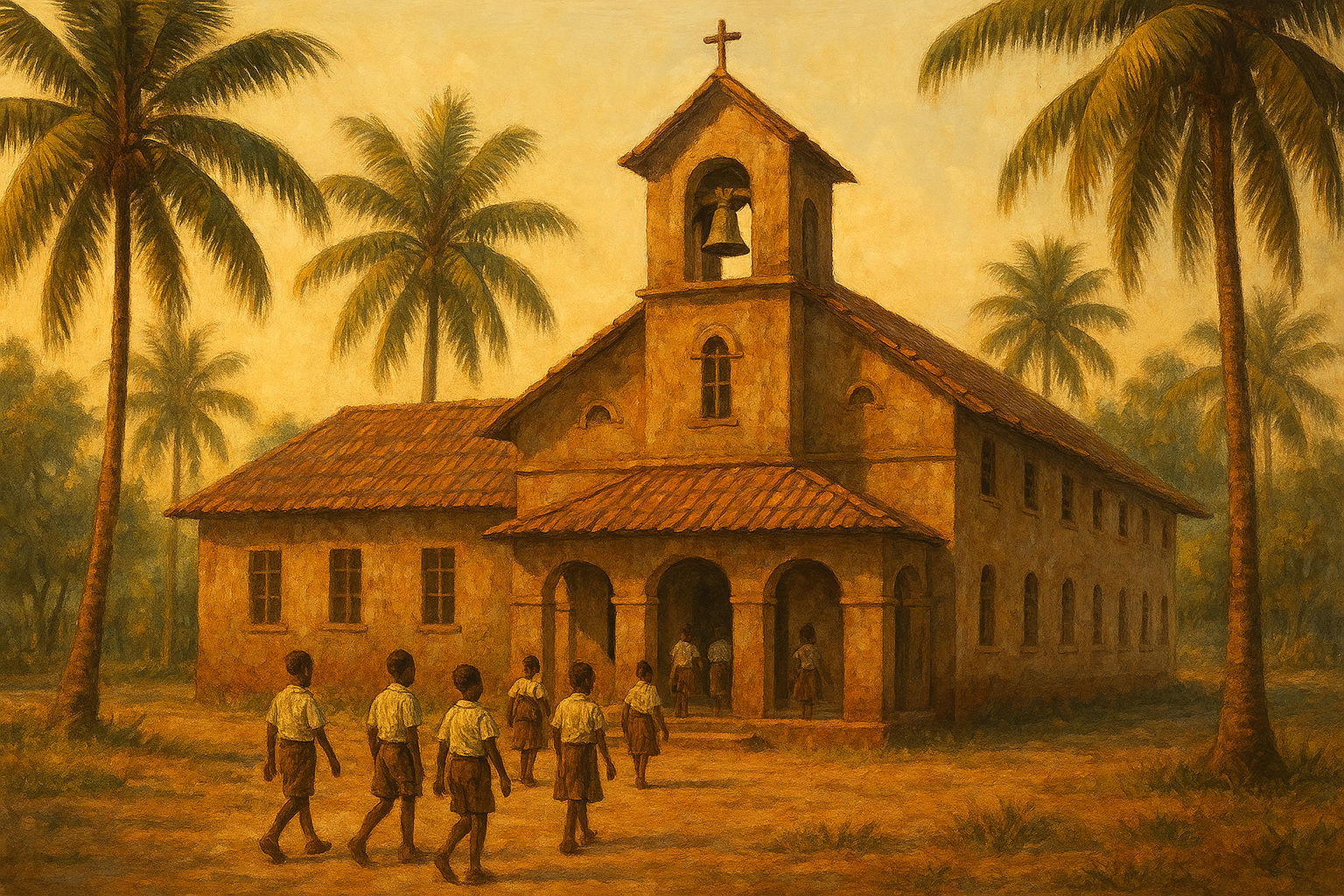
Not a government school. Not a colonial administration school. A church school. Built by missionaries. Funded by Christian organizations. Run according to Christian values.
Yet when Nigerians talk about their educational history, the church rarely gets the credit it deserves. We talk about colonial education as if the government built it. We talk about our great schools as historical landmarks without asking who laid the foundation and why.
This article is about that foundation. And it is a story every Nigerian Christian — and honestly every Nigerian full stop — should know.
Why Missionaries Built Schools in the First Place
Before we get into the history, it helps to understand the theology behind it.
Nineteenth century Protestant missionaries were not building schools as a side project or a community development initiative. They built schools because their theology demanded it.
Their core conviction was this — every Christian needs to read the Bible personally. Not just hear it explained by a priest. Not just receive someone else’s interpretation. Read it themselves, in their own language, with their own mind. That conviction — rooted in the Protestant Reformation — meant that literacy was not optional. It was a spiritual necessity.
Wherever a mission church was planted, a school followed almost immediately. The two were inseparable in missionary thinking. You could not have one without the other.
Catholic missionaries operated somewhat differently — they emphasized the sacraments and catechism more than individual Bible reading. But they too built schools, hospitals, and institutions as central parts of their mission work.
The result was that Christian missions became the largest builders of educational infrastructure in colonial Nigeria. Not because education was their primary goal. Because education was inseparable from their primary goal.
 The School That Started It All
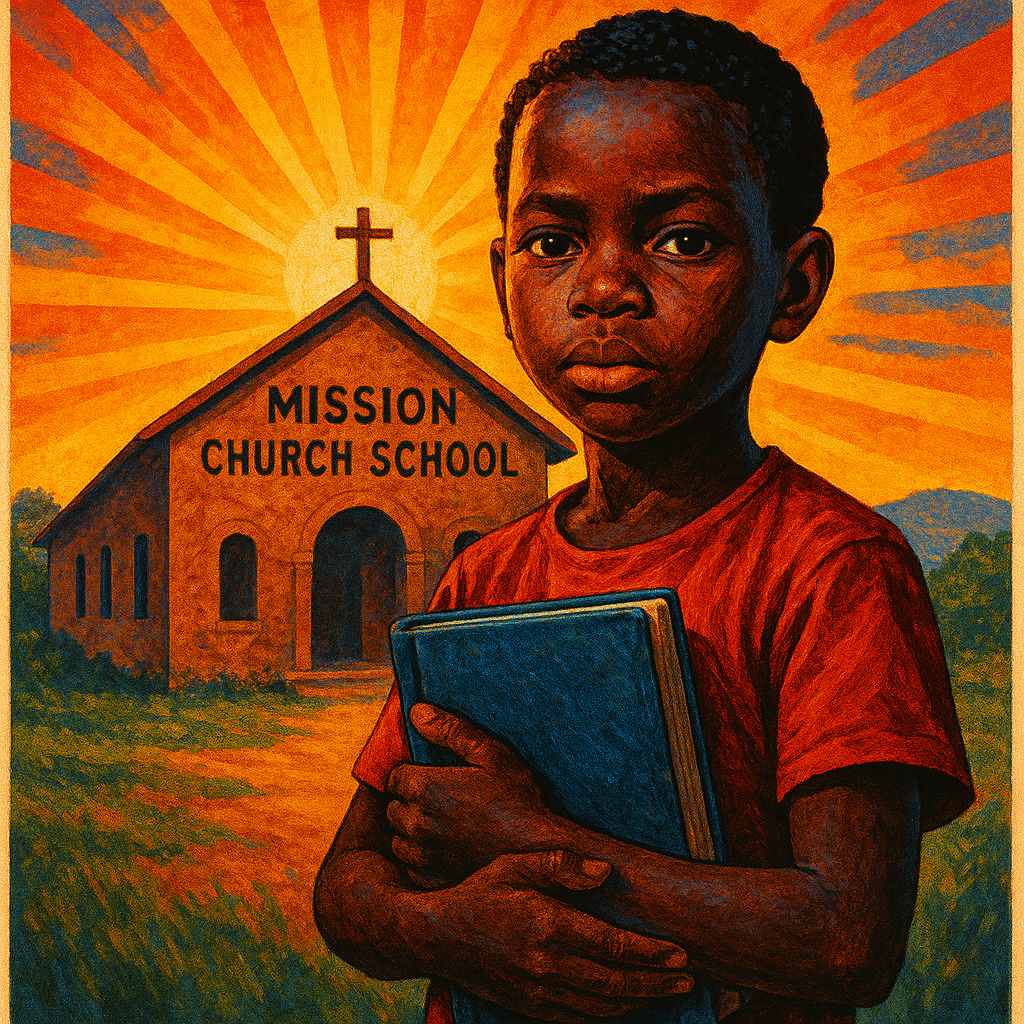
In 1842, a Methodist missionary named Thomas Birch Freeman opened a small school in Badagry, Lagos.
One teacher. A handful of students. No government funding. No impressive building. Just a missionary who believed that these children deserved to learn.
Nobody who sat in that school could have imagined what it would eventually lead to. Within a century the model it represented — a church-run school offering literacy, numeracy, and Christian instruction — had produced the professional class that would lead Nigeria to independence.
The CMS Grammar School in Lagos, founded in 1859, holds the distinction of being the first secondary school in Nigeria. Full stop. Not a government school. A church school. And its graduates changed this country.
Herbert Macaulay — often called the father of Nigerian nationalism — came from a family deeply connected to the Lagos mission church. Nnamdi Azikiwe, Nigeria’s first president, was educated in mission schools. Obafemi Awolowo, one of the greatest political minds Nigeria has produced, attended a Methodist mission school.
The political leaders who negotiated Nigerian independence from Britain were educated in institutions that Britain’s own missionaries had built. There is a deep and complicated irony in that. And Nigerian history tends to smooth right over it.
What Happened in Igboland
Nowhere in Nigeria did mission schools have a more dramatic and lasting impact than in Igboland.
The Igbo people’s enthusiasm for Western education became something of a legend in colonial Nigeria — and that enthusiasm was itself shaped by Christian mission influence. When CMS and Catholic missionaries opened schools in Onitsha, Aba, Umuahia, and surrounding areas, Igbo families sent their children in numbers that surprised even the missionaries.
This hunger for education had long term consequences. By the mid twentieth century the eastern region had a higher proportion of educated professionals than other parts of Nigeria. Igbo professionals staffed government offices across the country, ran businesses in Lagos and Kano, and established communities everywhere they went.
Dennis Memorial Grammar School in Onitsha, founded by the CMS in 1925, and Hope Waddell Training Institute in Calabar, founded by Scottish missionaries in 1895, produced graduates who shaped Nigerian history in ways that are still being felt today.
These were not government schools. They were missionary institutions built by Christian organizations with Christian purposes and run according to Christian values. Nigeria’s eastern professional class was built inside those walls.
The Northern Nigeria Exception
The mission school story in Nigeria is not uniform everywhere. And the exception is important to understand.
In northern Nigeria, the British colonial administration made a deliberate decision to restrict Christian missionary education.
The reason was political. Northern Nigeria was predominantly Muslim, and the British governed it through the Fulani emirate system — the Sokoto Caliphate and the emirs cooperated with British rule in exchange for protection of Islamic institutions. Allowing Christian missionaries to open schools in the north would have threatened that arrangement.
So they did not allow it.
The consequence was a significant educational gap between north and south that persisted for decades after independence and contributed directly to many of Nigeria’s most painful post-independence political tensions. The south, evangelized and educated by Christian missions, entered the modern era with dramatically higher literacy rates and far greater access to professional training.
This disparity is one of the most significant and most politically sensitive legacies of the mission school era. It deserves honest conversation rather than the silence it usually receives.
The Mission Hospital — Healthcare That Faith Built
Alongside the schools, Christian missions built hospitals and medical clinics that transformed Nigerian healthcare in ways that are equally significant and equally underacknowledged.
Wesley Guild Hospital in Ilesa — founded by Methodist missionaries in 1928. St. Luke’s Hospital in Anua — founded by Scottish Presbyterian missionaries in 1905. Baptist Medical Centre in Ogbomosho. Seventh-day Adventist Hospital in Ile-Ife. These institutions brought modern medicine to communities that had no access to it, trained Nigeria’s first generations of nurses and doctors, and established a tradition of faith-based healthcare that continues today.
When you visit one of these hospitals now — and many of them are still operating, still connected to their founding denominations — you are standing in a place built by people who believed that healing the body was as important as saving the soul.
That is a theology worth remembering.
What Happened to Mission Schools
In 1970, following the Nigerian Civil War, the federal and state governments took over mission schools across the country. Overnight, schools that missionaries had built and run for decades became government property.
The stated reason was standardization — removing undue religious influence over public education and ensuring consistent quality across the country. But many who attended mission schools before the takeover, and government schools after, will tell you that something was lost in that transition.
The combination of academic rigor and character formation that mission schools provided was difficult to replicate in government institutions that were often underfunded and bureaucratically managed. The sense of mission — that you were being educated not just for a career but for a purpose — did not survive the handover intact.
Some states have since returned schools to their original church owners. The debate about who should run Nigerian education continues today. And it is a debate that cannot be had honestly without understanding what the mission schools were and what they built.
FAQs
Q: Which is the oldest school in Nigeria? A: The Methodist Boys High School in Lagos traces its roots to the mission school founded in Badagry in 1842. The CMS Grammar School founded in 1859 is widely recognized as Nigeria’s oldest secondary school.
Q: Did mission schools charge fees? A: Early mission schools were often free or very low cost, funded by missionary societies in Europe. As the system expanded nominal fees were introduced, but ability to pay was not always the deciding factor for admission.
Q: Are mission schools still operating in Nigeria today? A: Yes. Many mission schools continue to operate, either returned to their original church owners or running as private faith-based institutions. They remain among the most respected schools in their communities.
Q: Did mission schools only admit Christians? A: Not exclusively. Many Muslim families in the south sent their children to mission schools for the quality of education without converting. In some areas mission schools explicitly enrolled students of all religious backgrounds.
The mission school was not just a building with a blackboard. It was an idea — that every human being regardless of their background deserved education. That knowledge was not the property of the elite. That literacy was a form of dignity.
Those ideas, planted in Nigerian soil by Christian missionaries in the nineteenth century, grew into a tree whose branches touched an entire nation.
Nigeria should know this history. And the church should be the first to tell it.
Written for Networknewss.com.ng | History & Heritage