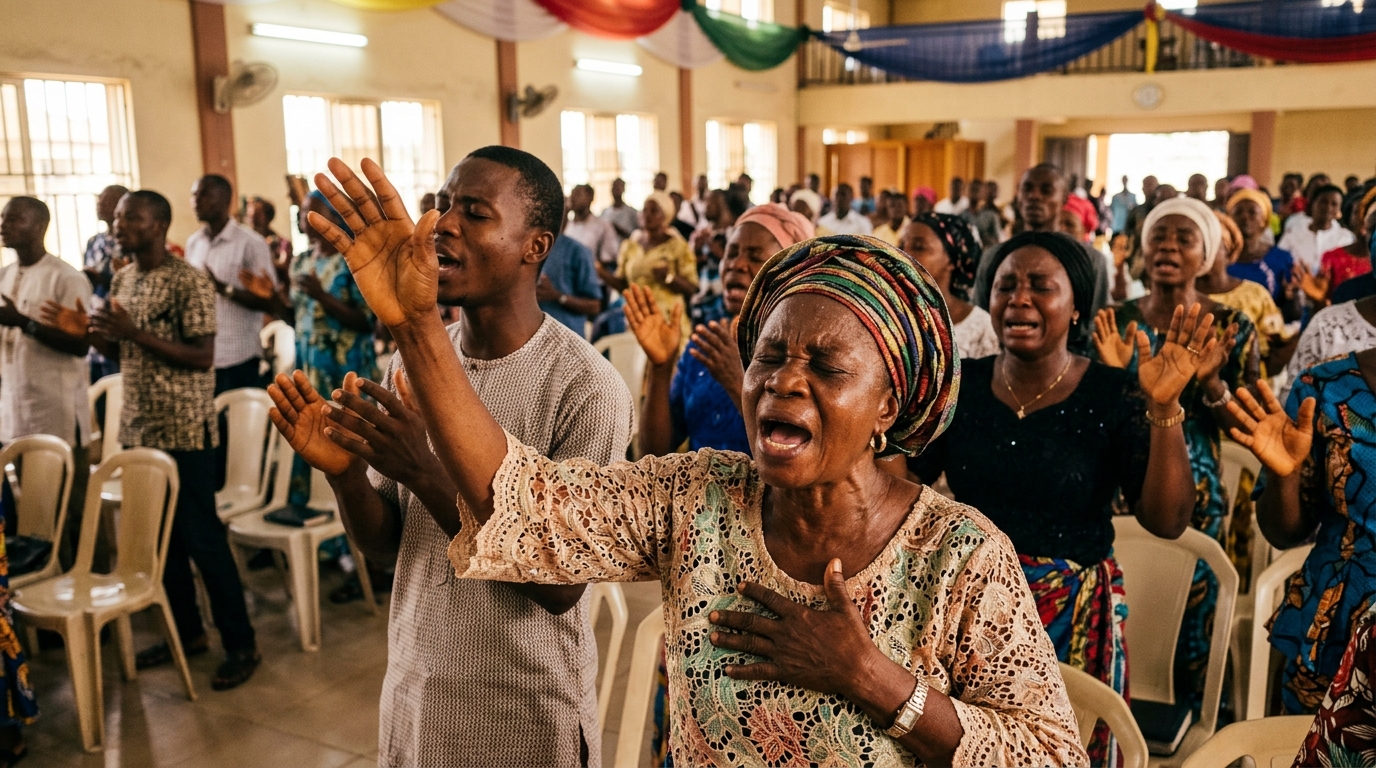
If you have never been to a Nigerian prayer meeting, let me paint the picture for you.
The moment the leader says “let us pray” — the room erupts.
Everyone prays at the same time. At full volume. In multiple languages simultaneously. Some people are sitting, some are standing, some are pacing, some are on their knees.
The noise is overwhelming. The prayers overlap and compete and combine into something that sounds less like a religious ceremony and more like a Lagos market on a Monday morning.
To someone from outside Nigerian Christianity, or even to some Nigerian Christians who grew up in quieter church traditions, this can feel chaotic. Disorganized. Maybe even disrespectful.
I have heard people ask, does God not hear quiet prayers? Does shouting make it more effective? Is this just noise dressed up as spirituality?
Those are fair questions. And they deserve honest answers.
Because what looks like chaos from the outside is actually something deeply intentional, deeply rooted, and, when you understand it properly, deeply biblical.
You Have to Understand Where It Comes From
To understand Nigerian Christian prayer, you first have to understand the spiritual world that Nigerian Christianity was born into.
Traditional African religious practice across Nigeria,Yoruba, Igbo, Hausa, Efik, Tiv, and every other group, shared a fundamental understanding of the spiritual world. The spiritual world was not distant. It was not abstract. It was immediate, present, and actively engaged with every part of daily life.
Spiritual forces influenced your harvest. Your health. Your marriage. Your children. Your enemies. Your protection. Engaging with the spiritual world was not a Sunday activity, it was a constant, daily, urgent necessity.
Prayer and ritual in traditional African religion reflected that urgency. Invocations were loud. Specific. Physical.
You called out to the ancestors and the divinities by name, with clear requests, with intensity that matched the seriousness of what you were asking.
The act of speaking, of giving your words full voice, was itself an act of power. Words in many African traditions do not just describe reality. They participate in creating it.
When Christianity arrived in Nigeria it did not land in a spiritual vacuum. It arrived in a world already saturated with spiritual awareness. A world that already knew how to pray with its whole body, its whole voice, its whole self.
Nigerian Christians did not adopt a European model of prayer and then add African flavor to it. They encountered the God of the Bible through frameworks their own culture had already formed. And those frameworks shaped how they prayed.
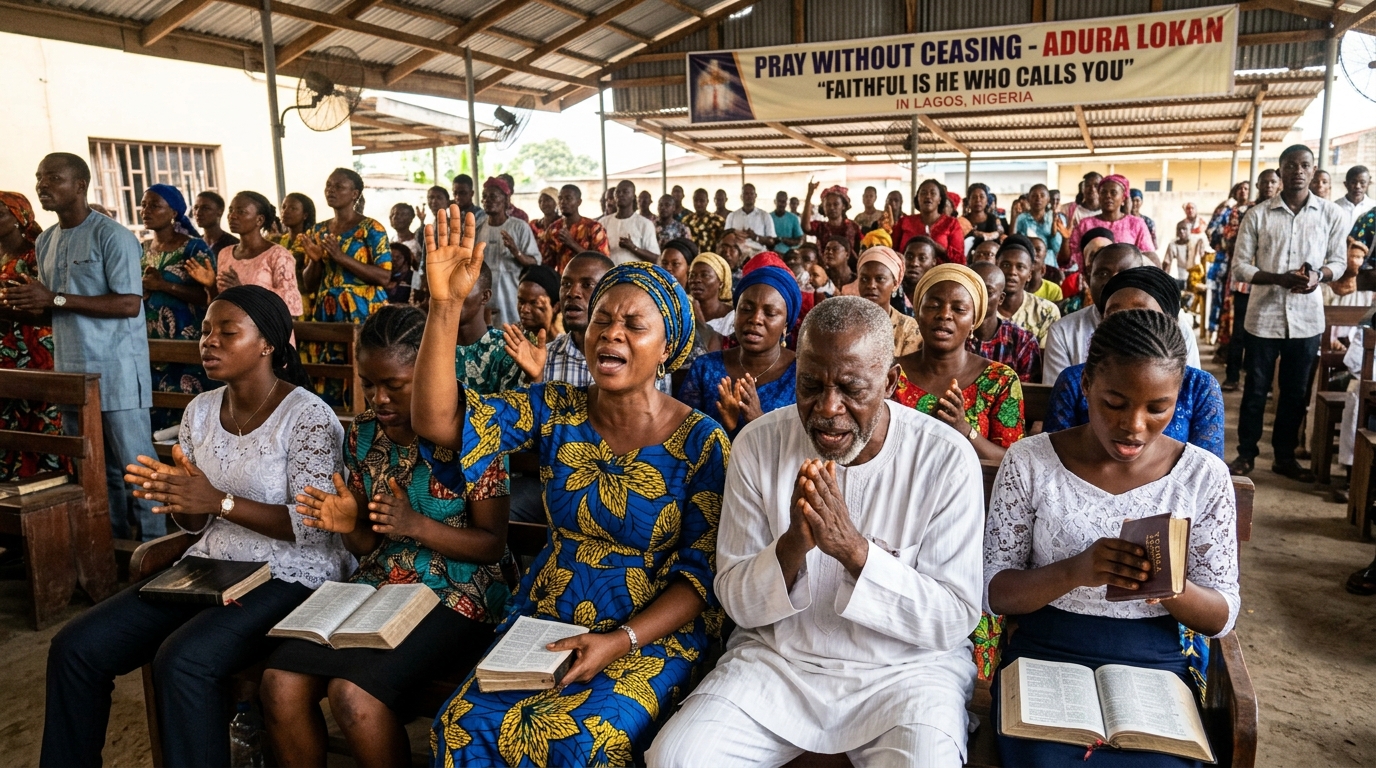 What the Bible Actually Says About Loud Prayer
Here is what surprises many people when they actually check.
The Bible does not describe prayer as quiet, restrained, or polite.
Psalm 22 opens with words that Jesus himself quoted from the cross — “My God, my God, why have you forsaken me? Why are you so far from saving me, so far from my cries of anguish? I cry out by day but you do not answer, by night but I find no rest.” This is not a composed bedtime prayer. This is desperate, loud, almost confrontational prayer from a person in genuine agony.
Hannah in 1 Samuel 1 prayed so intensely that Eli the priest watching her assumed she was drunk. She was not drunk. She was in deep anguish and praying from the depths of it. Her lips were moving but no sound was coming out, but her whole body was engaged in the prayer. God answered her.
Elijah on Mount Carmel in 1 Kings 18 prayed with physical intensity, prostrating himself on the ground, commanding his servant to look for rain seven times without giving up, refusing to stop until the answer came. His prayer was aggressive, persistent, and physical.
And then there is Jesus himself. In the Garden of Gethsemane, Luke 22:44 says he prayed so earnestly that his sweat became like drops of blood falling to the ground. The book of Hebrews says he offered prayers with loud cries and tears. The Son of God prayed loudly. He prayed with tears. He prayed with such physical intensity that his body responded to it.
The early church in Acts 4 prayed corporately with such intensity that the building they were meeting in was physically shaken. That was not a quiet prayer meeting.
The next time someone tells you that loud, intense, physical prayer is unbiblical — you can tell them to read their Bible more carefully.
The 1930 Revival and How It Shaped Everything
The 1930 Aladura revival that we have talked about in previous articles on this blog did not just produce the Christ Apostolic Church. It produced a distinctively Nigerian prayer culture that shaped every form of Nigerian Christianity that came after it.
The word Aladura itself comes from the Yoruba word for prayer people. That name tells you everything about what the movement considered most important.
The Aladura movement made prayer the central act of Christian life in a way that went beyond anything the mission churches had modeled. All-night prayer vigils became normal. Prayer mountains, dedicated sites for extended prayer and fasting, were established across Yorubaland. Communal prayer, loud, physically expressive, and intensely focused on spiritual warfare and divine intervention, became the defining mark of authentic Nigerian Christianity.
That model spread far beyond the Aladura movement itself. When the Pentecostal explosion happened in the 1970s and 1980s — when RCCG was growing, when Winners Chapel was being founded, when Mountain of Fire was being established, they all drew from this same prayer culture. Even when they did not explicitly say so.
The loud, aggressive, persistent prayer that fills Nigerian churches every Sunday is Aladura’s greatest legacy. Most Nigerian Pentecostals are praying in a tradition that Babalola and Odunlami established in 1930. They just do not always know it.
The Mountain of Fire Phenomenon
No conversation about Nigerian prayer culture is honest without talking about Mountain of Fire and Miracles Ministries.
MFM was founded by Dr. Daniel Olukoya in Lagos in 1989 and has grown into one of the largest Pentecostal denominations in Nigeria. Its prayer meetings are famous and to some people, infamous for their intensity.
MFM practices what it calls violent prayer. The theological basis is Matthew 11:12 where Jesus says the kingdom of heaven has been subjected to violence and violent people have been raiding it. MFM takes that verse seriously and literally. Prayer points in MFM meetings are confrontational, aggressive, and specific commanding spiritual forces to be bound and destroyed, claiming breakthroughs with forceful declarations, engaging the spiritual world as though it is real and hostile and needs to be fought.
To critics this is excessive spiritualization of ordinary life’s challenges, or manipulation of vulnerable people through fear. To MFM’s millions of members it is faithful engagement with a spiritual world that is genuinely real and genuinely active.
What cannot be argued is that it resonates. MFM has grown from a small prayer group to a denomination with branches across the world. Whatever you think of the theology, the prayer culture it represents clearly speaks to something deep in the Nigerian Christian experience.
What Quiet Traditions Can Learn From Nigeria
I want to be fair here. Western contemplative prayer traditions have real value. Benedictine silence. Quaker waiting. The stillness of contemplative prayer. Psalm 46:10 says “Be still and know that I am God.” That verse is as real as any of the loud prayer verses.
The issue is not loud versus quiet. Both have biblical foundation. Both can be genuine. Both can also be empty.
The issue is that Western Christianity has sometimes treated its own quiet, restrained prayer tradition as the only legitimate form and dismissed louder, more expressive traditions as emotionalism, cultural excess, or spiritual immaturity.
That is both historically wrong and culturally arrogant.
Nigerian Christianity’s prayer culture takes seriously the urgency of prayer. The reality of spiritual forces. The value of communal intercession.
The idea that prayer is not merely a polite conversation with a distant deity but an engagement with a present and powerful God who responds to persistence, faith, and honest desperation.
That is not a departure from biblical faith. That is one of its most authentic expressions.
FAQs
Q: Is loud prayer more effective than quiet prayer? The Bible does not suggest that volume determines whether God hears or answers. What scripture emphasizes is faith, persistence, and alignment with God’s will. Both quiet and loud prayer can be genuine and both can be empty religious performance. The issue is never volume. The issue is always sincerity.
Q: What is a night vigil? A night vigil — also called a night watch or all-night prayer meeting — is an extended prayer session running through the night, typically from around 10pm to 6am. They are common in Nigerian Pentecostal and Aladura churches and are considered by those traditions to be a particularly powerful form of intercession.
Q: What does MFM stand for? Mountain of Fire and Miracles Ministries. Founded by Dr. Daniel Olukoya in Lagos in 1989 it has grown into one of Nigeria’s largest Pentecostal denominations with branches across the world.
Q: Why do Nigerian churches use prayer points? Prayer points are structured, specific topics that guide a prayer session and help large groups pray in a focused direction simultaneously. They reflect the Nigerian prayer tradition’s emphasis on specificity, intentionality, and spiritual warfare. Rather than vague general prayers, prayer points target specific needs, specific situations, and specific spiritual opposition.
When Nigerians pray loudly they are not being disruptive. They are being themselves.
A people formed by a culture that has always understood the spiritual world as immediate and urgent. Reading a Bible that confirms that understanding on nearly every page. And expressing their faith in ways that make complete sense in their context.
That is not something to be embarrassed about. It is not something to apologize for. It is something to understand, to own, and to be genuinely proud of.
Written for Networknewss.com.ng | Faith