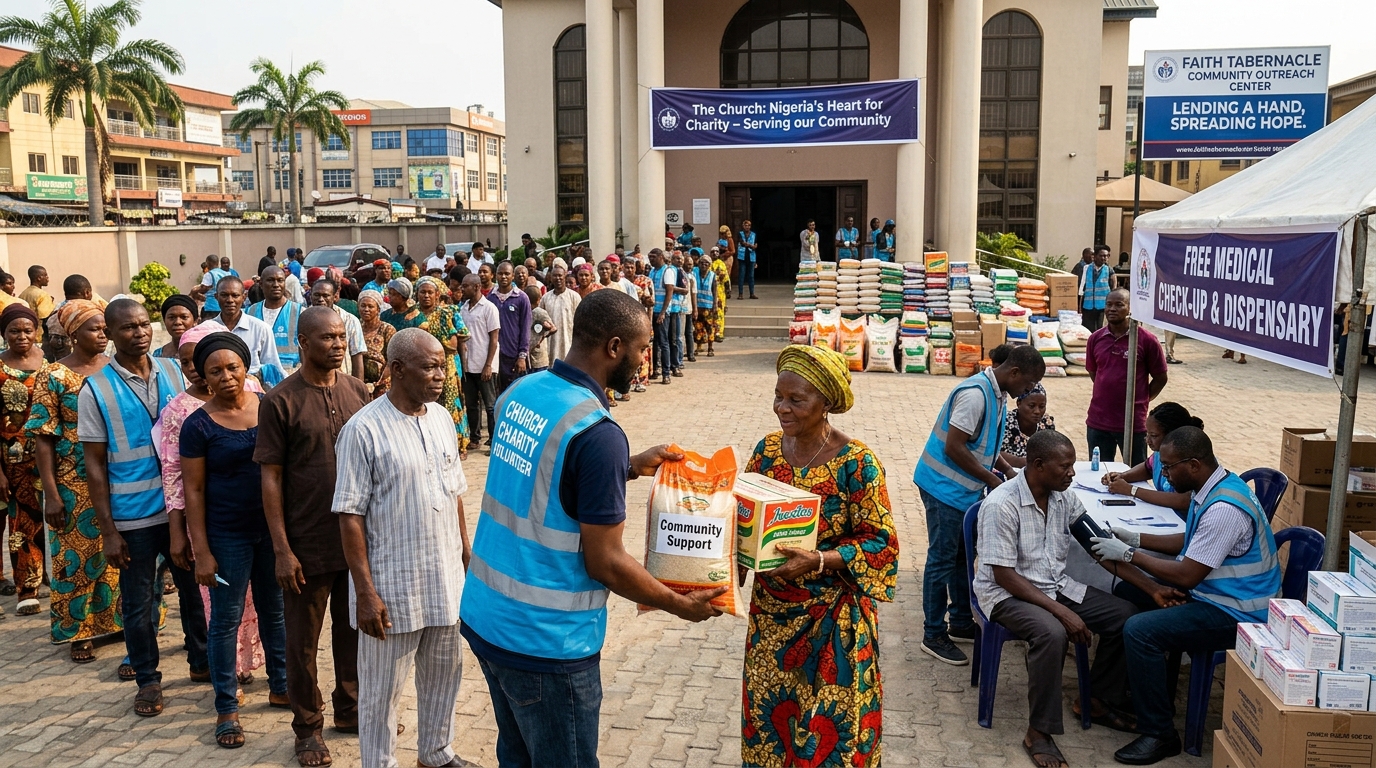
There is a building in Abeokuta that most Nigerians have never heard of.
It was built in the 1840s. It was not a palace. It was not a government office. It was not a military barracks.
It was a small, modest structure attached to a church compound, built by missionaries who had noticed something that the colonial government had not yet gotten around to noticing.
Children were dying alone.
War, disease, poverty, and the disruption of the slave trade had created a generation of children in southwestern Nigeria with no parents, no family, no protection, and no future.
They were surviving on the margins of communities that did not always have the resources or the cultural framework to absorb them. Some were being sold.
Some were dying of hunger. Some were simply disappearing.
And the church did something about it before anyone else did.
That building in Abeokuta was one of the earliest structured attempts at child welfare in Nigerian history.
It was not built by the government. It was not funded by a colonial administration that was more interested in trade routes and taxation than in orphaned children.
It was built by Christians who read their Bible, encountered suffering, and decided that faith without action was not faith at all.
This is the story of how Nigerian churches became the nation’s biggest charity. And it is a story that Nigeria has never fully told itself.
Before the Government, There Was the Church
To understand what Christian Aid in Nigeria really means historically, you have to understand what Nigeria looked like before any government social services existed.
There were none.
The colonial administration that governed Nigeria from the late nineteenth century onward was not primarily interested in social welfare.
It was interested in administration, taxation, trade, and maintaining order.
The idea that a government had an obligation to feed the hungry, house the homeless, care for the sick, or protect orphaned children was not a priority of British colonial policy in West Africa.
Into that vacuum walked the church.
The Church Missionary Society, the Catholic Spiritans, the Methodist Missionary Society, the Scottish Presbyterians, and later indigenous African church movements did not arrive in Nigeria with only Bibles in their hands.
They arrived with a theology that took seriously the biblical command to care for the vulnerable. And that theology produced institutions.
Schools for children who had no access to education. Hospitals for communities that had no access to medicine. Feeding programs for the hungry. Shelter for the displaced. And yes, homes for children who had no one to care for them.
These were not side projects or public relations exercises. They were expressions of a core conviction that the God of the Bible cared about human suffering in its totality, body and soul simultaneously, and that his followers were obligated to do the same.
 The Missionary Hospitals That Saved Generations
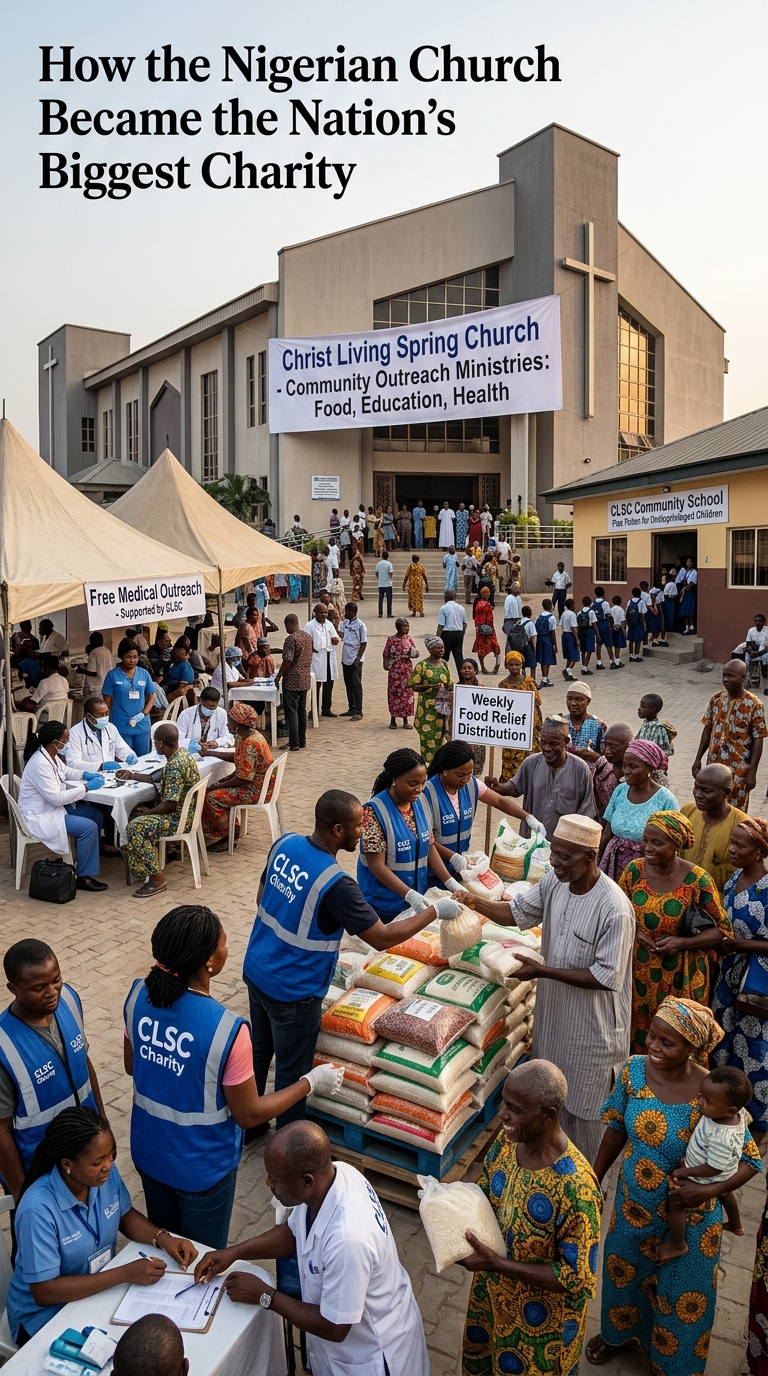
Before we talk about orphanages specifically, we need to talk about missionary hospitals, because they were the foundation of Christian Aid in Nigeria and they saved more lives than most Nigerians today realize.
Wesley Guild Hospital in Ilesa, founded by Methodist missionaries in 1928, was one of the first modern medical facilities in what is now Osun State.
Before it existed, communities across the region had no access to surgical care, no access to treatment for infectious diseases, and no trained medical professionals within traveling distance.
The hospital did not just treat disease. It trained Nigerian nurses and medical assistants, creating the first generation of indigenous healthcare workers in the region.
It established maternal health services that reduced the horrifying rates of death in childbirth that were common across West Africa at the time. It ran outreach programs that took basic medical care into villages that could not come to the hospital.
St. Luke’s Hospital in Anua, founded by Scottish Presbyterian missionaries in 1905 in present-day Akwa Ibom State, did the same for the southeastern region.
It was among the first institutions in that area to offer surgical care, to treat tropical diseases systematically, and to train local people in basic healthcare.
Baptist Medical Centre in Ogbomosho, established by American Baptist missionaries in 1896, became one of the most significant medical institutions in Yorubaland. It treated hundreds of thousands of patients over its first century of operation and trained generations of Nigerian medical professionals.
These hospitals were Christian Aid projects in the most literal sense of the term. They were funded by Christian organizations, staffed initially by Christian missionaries, and motivated by a Christian theology that said healing the sick was not optional for followers of Jesus.
The Orphanage Story Nobody Tells
Now back to Abeokuta. And to a story that deserves to be told properly.
The disruption caused by the slave trade in southwestern Nigeria had created a crisis of orphaned and abandoned children by the time missionaries arrived in the 1840s.
The illegal slave trade, though technically abolished by Britain in 1807, continued illegally for decades afterward. Communities were raided. Families were destroyed.
Children were left without parents in numbers that overwhelmed traditional community support systems.
Henry Townsend, a CMS missionary who arrived in Abeokuta in 1843, was among the first to formally document the situation of these children and to attempt a structured response.
The church compound at Abeokuta became a place of refuge for some of these children, fed, housed, educated, and given some measure of protection within the mission community.
This was not yet a formal orphanage in the institutional sense that the word implies today.
But it was the beginning of a tradition of church-based child welfare in Nigeria that would develop and formalize over the following decades.
By the late nineteenth and early twentieth centuries, formal church-run homes for orphaned and vulnerable children existed in several parts of southern Nigeria.
The Catholic missions in particular developed structured institutional responses to child welfare that included dedicated buildings, trained staff, and systematic programs for education and vocational training alongside basic care.
Mary Slessor’s work in Calabar, which we have discussed in a previous article on this blog, included caring for twin children and other abandoned babies in a way that was essentially informal foster care conducted on a massive scale.
She personally housed, fed, and raised dozens of children whom the community would otherwise have left to die.
Her compound was, in every functional sense, an orphanage run by one Scottish woman on faith and determination.
What Is Christian Aid and How Does It Connect to Nigeria
The formal organization known as Christian Aid was founded in Britain in 1945, originally as an agency to help refugees displaced by the Second World War. It later expanded its mandate to address poverty and suffering globally, including across Africa.
Christian Aid Nigeria operates today as part of this global network, funding development projects, emergency relief, and long-term poverty reduction programs across the country.
Its work includes supporting smallholder farmers, providing clean water access, responding to humanitarian crises in conflict-affected areas, and working with local partner organizations on community development.
But what many people who search for Christian Aid Nigeria do not realize is that Christian Aid as an international organization is simply the latest chapter in a story of church-based charitable work in Nigeria that goes back almost two centuries.
The impulse that founded Christian Aid in 1945 is the same impulse that built Wesley Guild Hospital in 1928, that opened schools in Onitsha in 1857, that sheltered orphaned children in Abeokuta in the 1840s.
It is the impulse of a faith that takes seriously the words of Matthew 25:35 to 36, where Jesus says, “I was hungry and you gave me food, I was thirsty and you gave me drink, I was a stranger and you welcomed me, I was naked and you clothed me, I was sick and you visited me.”
The church in Nigeria has been trying to live that text for nearly two hundred years.
Nigerian Churches as Christian Charities Today
The tradition of church-based charity in Nigeria did not end with the missionary era. It continued through independence, through the Civil War, through the economic crises of the 1980s and 1990s, and into the present day.
During the Nigerian Civil War of 1967 to 1970, it was church organizations, particularly the Catholic Church and the World Council of Churches, that organized the most significant humanitarian relief efforts for civilians affected by the conflict.
The images of starving Biafran children that shocked the world in the late 1960s prompted a massive church-led response that operated often in advance of and sometimes in defiance of government restrictions on aid delivery.
Today, Nigerian megachurches run some of the most significant charitable operations in the country. The Redeemed Christian Church of God operates feeding programs, schools, and healthcare facilities across Nigeria.
Living Faith Church, known as Winners Chapel, runs educational institutions that serve hundreds of thousands of students.
The Catholic Church remains the largest non-government provider of healthcare and education in Nigeria, operating hundreds of hospitals, clinics, and schools across every state.
These are not peripheral activities. They are the continuation of a two-hundred-year tradition of Nigerian churches doing what the government could not or would not do, feeding the hungry, healing the sick, educating the uneducated, and sheltering those with nowhere else to go.
The Biblical Foundation That Has Always Driven This Work
None of this happened by accident. The Christian charity tradition in Nigeria is rooted in a specific and consistent biblical theology that has driven believers to action across generations.
James 2:14 to 17 asks the question directly. “What good is it, my brothers and sisters, if someone claims to have faith but has no deeds? Can such faith save them?
Suppose a brother or a sister is without clothes and daily food.
If one of you says to them, go in peace, keep warm and well fed, but does nothing about their physical needs, what good is it? In the same way, faith by itself, if it is not accompanied by action, is dead.”
That text has been quoted in Nigerian church pulpits for as long as there have been Nigerian church pulpits. It has motivated missionaries to build hospitals when they could have just built churches.
It has motivated pastors to open feeding programs when they could have just preached sermons.
It has motivated ordinary Nigerian Christians to give time, money, and resources to their communities in ways that the government has never fully measured or acknowledged.
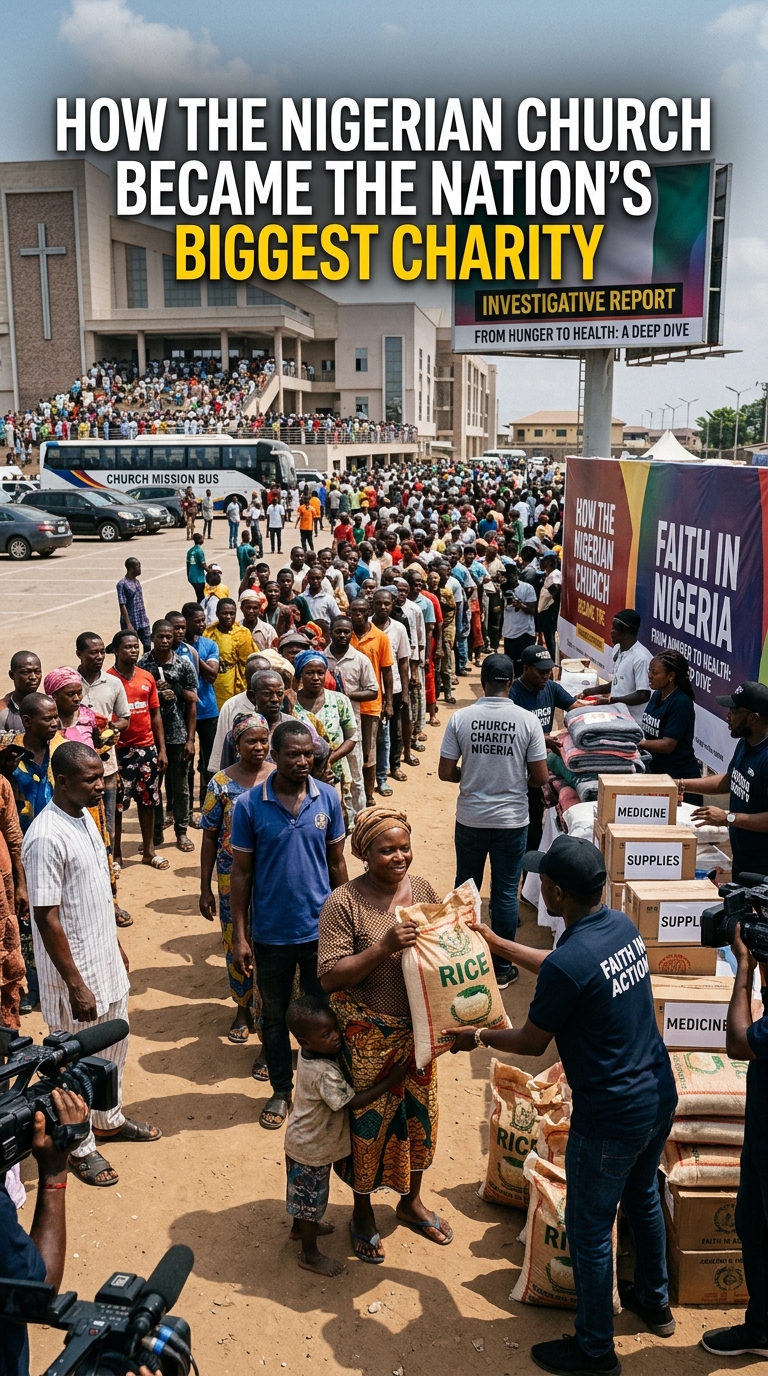
The church did not become Nigeria’s biggest charity by accident or by ambition. It became Nigeria’s biggest charity because it took its own scriptures seriously.
Religious Charities in Nigeria Today — What Exists and What It Does
For anyone searching for a list of Christian charities in Nigeria or examples of religious charities doing meaningful work, here is a picture of what exists today.
The Catholic Caritas Foundation of Nigeria coordinates the Catholic Church’s social development and humanitarian work across the country, covering everything from emergency food relief to HIV/AIDS support programs to peace building in conflict zones.
The Christian Aid Nigeria program works through local partner organizations on long-term development, focusing particularly on rural communities, women’s economic empowerment, and climate resilience for farmers.
The Redeemed Christian Church of God’s social arm runs feeding programs, free medical outreaches, and educational scholarships across Nigeria and internationally.
The Deeper Life Bible Church Foundation conducts regular free medical camps, distributes food and relief materials to vulnerable communities, and supports widows and orphans through structured programs.
Many Anglican dioceses across Nigeria run hospitals, schools, and orphanages that have been operating continuously since the missionary era, some of them for over a hundred years.
And beyond these formal structures, thousands of individual Nigerian churches run informal food banks, widow support groups, school fee assistance programs, and community development initiatives that never appear in any national database but collectively represent an enormous amount of charitable activity.
What This History Means for Nigerian Christians Today
The history of Christian charity in Nigeria carries a challenge that every Nigerian believer needs to sit with honestly.
The church built this country’s first orphanages, its first hospitals, its first schools for girls, its first formal welfare programs for the vulnerable. It did this not because it was required to by law, not because it was funded by government, not because it received public recognition. It did it because it believed that following Jesus meant caring for the people Jesus cared about.
That tradition is under pressure today in ways that the early missionaries could not have anticipated. Nigerian Christianity has become in many expressions more focused on individual breakthrough and personal prosperity than on collective responsibility and community care. The megachurch model, for all its genuine achievements, sometimes creates a culture where success is measured in building size and congregation numbers rather than in hungry people fed and orphans housed.
The history of Christian Aid in Nigeria calls the church back to something older and more foundational than any contemporary model. It calls the church back to James 2. To Matthew 25. To the simple, costly, unglamorous conviction that faith without works is dead.
The church that built Nigeria’s first orphanage did not do it for recognition. It did it because children were dying and nobody else was doing anything about it.
That spirit is still needed. Perhaps now more than ever.
FAQs
Q: What does Christian Aid do in Nigeria specifically?
A: Christian Aid Nigeria works through local partner organizations on long-term development programs including support for smallholder farmers, clean water access, humanitarian relief in conflict-affected areas like the Northeast, and women’s economic empowerment programs. It does not operate directly but funds and supports Nigerian civil society organizations doing development work on the ground.
MQ: What are some examples of religious charities operating in Nigeria today?
A: Major examples include the Catholic Caritas Foundation of Nigeria, the RCCG’s social development arm, the Anglican Church’s hospital and school network, Christian Aid Nigeria, and the Deeper Life Foundation. Beyond these formal structures thousands of individual churches run informal charitable programs in their communities.
Q: Is Christian Aid a Nigerian organization?
A: Christian Aid is a British organization founded in 1945 that works globally including in Nigeria through local partner organizations. It is distinct from the broader tradition of Nigerian church-based charity which predates it by nearly a century.
Q: Which Nigerian church runs the most hospitals today?
A: The Catholic Church operates the largest network of faith-based hospitals and clinics in Nigeria, with hundreds of facilities across every state. Anglican dioceses also operate significant hospital networks, many of them established during the missionary era and operating continuously since then.
Q: How can Nigerian Christians get involved in Christian Aid projects?
A: Individual Nigerian Christians can support existing church-based charity programs in their own congregations, volunteer with organizations like Caritas Nigeria, support the social development arms of their denominations, or connect with Christian Aid Nigeria through its website to learn about partnership opportunities with local development organizations.
The building in Abeokuta where this story began is not famous. It does not appear in most history books. There is no monument marking the spot where the church decided that orphaned children deserved shelter and care before any government thought to provide it.
But it happened. And it was the beginning of a tradition of Christian charity in Nigeria that has fed millions, healed hundreds of thousands, educated generations, and held communities together through wars, famines, and crises that would have been far more devastating without the church standing in the gap.
Nigeria’s biggest charity has never been a government agency. It has never been a foreign NGO. It has always been the church, imperfect, inconsistent, sometimes distracted by its own ambitions, but always, in its best moments, returning to the simple conviction that faith without works is dead.
That conviction built the first orphanage. It built the first hospital. It opened the first school for girls. It fed the first famine victims. It sheltered the first war refugees.
And it is still working today, in thousands of churches across this country, in ways that no database has ever fully counted.
Written for Networknewss.com.ng | Faith